I start by lining my loaf pan with parchment paper, leaving extra hanging over the sides. This makes lifting the finished cake out so much easier later. I give the parchment a good spray with nonstick cooking spray before setting the pan aside.
Next, I add the softened butter and sugar to my stand mixer bowl. I beat them together until the mixture turns pale, light, and fluffy, which usually takes a few minutes. This step traps air that helps the cake rise properly.
I crack the eggs in one at a time, beating well after each addition. Adding them slowly keeps the batter from curdling and helps everything stay smooth and well combined before moving forward.
In a separate bowl, I whisk together the flour, baking powder, and salt. Whisking evenly distributes the leavening agent so I don't end up with random dense or overly airy pockets in the finished cake.
I add the dry mixture and the cider in three alternating additions, starting and ending with the flour mixture. I mix gently after each addition, just until combined, so the batter stays tender instead of tough.
I pour the batter into my prepared pan and tap it firmly on the counter once or twice to release air bubbles. Then I bake it at 350°F for 40 to 50 minutes, until a knife inserted in the center comes out clean.
Once baked, I let the cake rest in the pan for 10 to 15 minutes. Then I run a knife along the edges, lift it out using the parchment flaps, and let it cool completely on a wire rack before adding any glaze.
While the cake cools, I whisk the sifted powdered sugar with apple cider and a pinch of cinnamon until it's smooth. I adjust the cider amount slowly until the glaze reaches a pourable, slightly thick consistency.
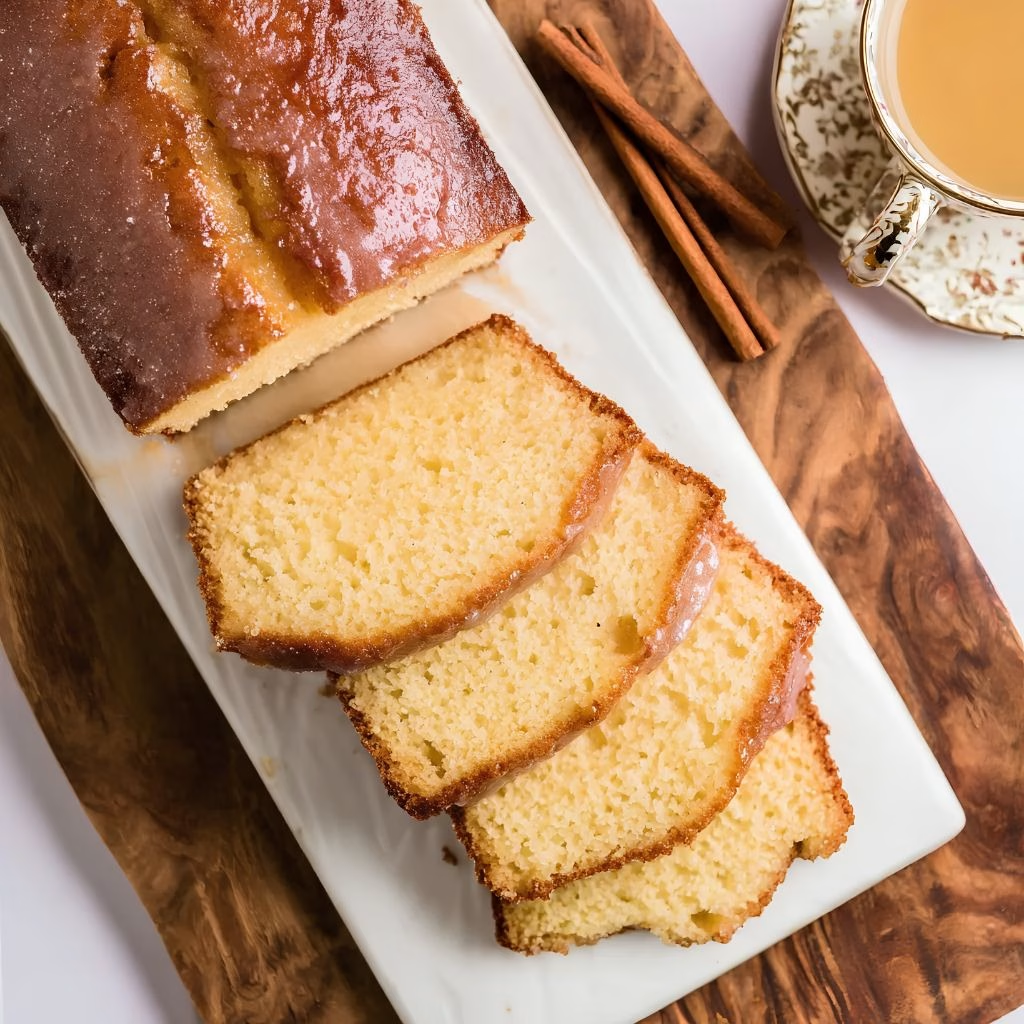
Once the cake is completely cool, I pour the glaze evenly over the top, letting it drip naturally down the sides. I let it set for a few minutes before slicing so it doesn't slide right off.