Go Back
Baked Apple Cider Pork Tenderloin with Roasted Veggies Recipe
Ash Tyrrell

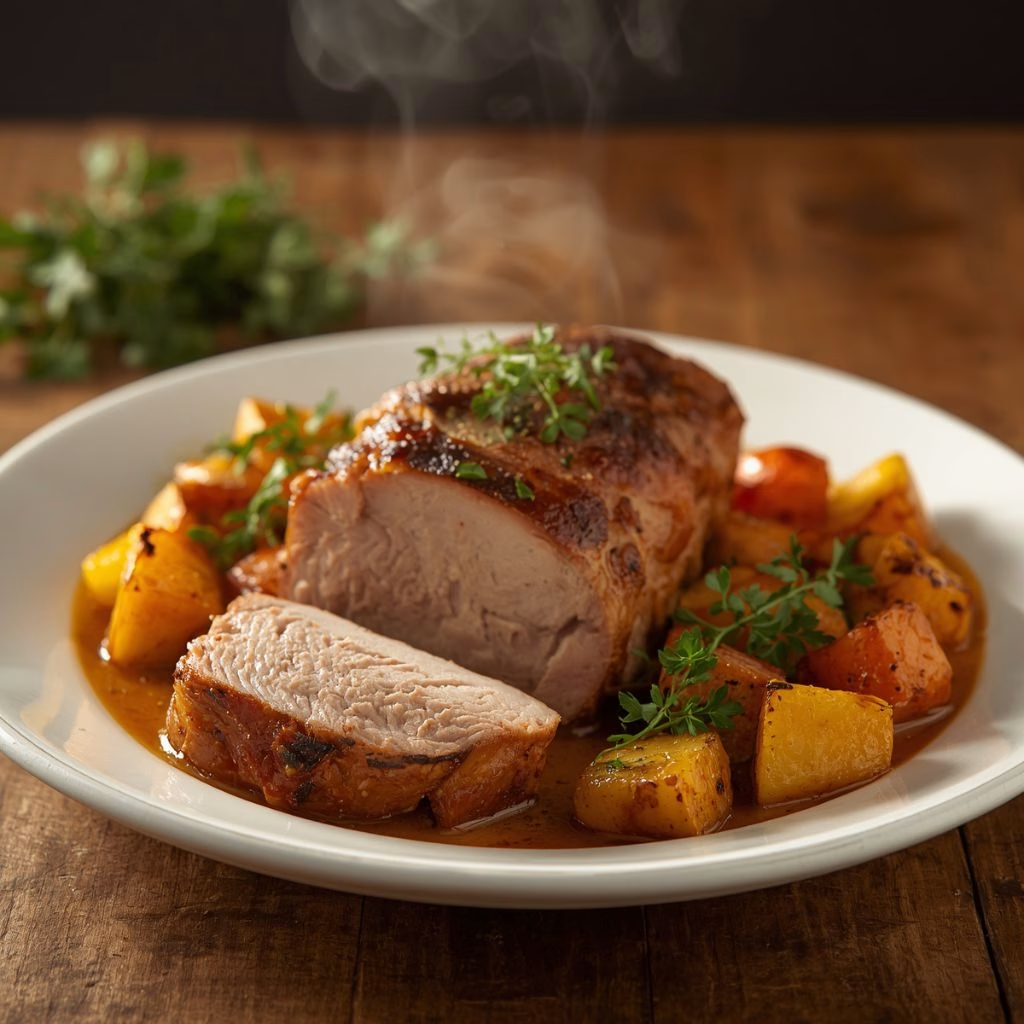
Baked Apple Cider Pork Tenderloin with Roasted Veggies

I still remember the first time I pulled this pan out of the oven the whole kitchen smelled like a fall market, part cozy apple orchard, part Sunday roast. I'd been looking for a dinner that felt special without demanding hours of my evening, and this one nailed it.
Prep Time 20 minutes
Cook Time 40 minutes
Servings: 4

Ingredients
  

  • 1 pork tenderloin about 1½ pounds — this cut cooks fast and stays lean, so don't swap it for a thicker pork loin without adjusting time
  • 1 cup apple cider — go for real apple cider not apple juice, for a deeper, more autumnal flavor
  • 2 tablespoons Dijon mustard — adds tang and helps the marinade cling to the meat
  • 2 tablespoons olive oil — keeps the pork moist and helps the herbs stick
  • 3 garlic cloves minced — fresh garlic beats the jarred stuff here, hands down
  • 1 tablespoon fresh rosemary chopped — fresh herbs give a brighter, less dusty flavor than dried
  • 1 teaspoon fresh thyme — pairs beautifully with the rosemary and apple notes
  • 1 teaspoon salt — essential for drawing out flavor in the marinade
  • ½ teaspoon black pepper — just enough for a gentle kick
  • 1 pound baby potatoes halved — small potatoes roast faster and more evenly than large ones
  • 3 large carrots sliced — cut them close in size to your potato halves so everything finishes together
  • 12 ounces Brussels sprouts halved — halving lets the cut side caramelize instead of steaming
  • 1 large red onion cut into wedges — wedges hold together better on the pan than loose slices
  • 2 tablespoons olive oil — helps everything crisp up instead of turning soggy
  • 1 teaspoon garlic powder — an easy way to season the whole vegetable mix at once
  • 1 teaspoon paprika — brings warmth and a nice color to the roasted veggies
  • Salt and pepper to taste — season generously vegetables need more than you'd think
  • Fresh parsley — a scattering right before serving perks up the whole plate
  • Extra rosemary — a sprig or two makes the presentation feel intentional
  • Sliced apples — adds a fresh sweet contrast to the savory pork

Method
 

  1. Set your oven to 400°F (200°C) so it's fully heated by the time you're ready to roast. Line a large baking sheet with parchment paper to make cleanup painless later. A hot oven from the start helps the vegetables caramelize instead of just steaming through.
  2. In a mixing bowl, combine the apple cider, Dijon mustard, olive oil, garlic, rosemary, thyme, salt, and pepper. Whisk until it looks smooth and well blended. Set aside about a third of this mixture to brush on later, since you don't want to reuse marinade that touched raw pork.
  3. Pat the tenderloin dry with paper towels first, since a dry surface helps the marinade stick and browns better in the oven. Coat it evenly in the remaining marinade and let it sit for at least 20 minutes. If your schedule allows, 2 hours in the fridge gives noticeably deeper flavor.
  4. While the pork marinates, spread the potatoes, carrots, Brussels sprouts, and onion wedges across your lined baking sheet. Drizzle with olive oil, then sprinkle on the garlic powder, paprika, salt, and pepper. Toss everything by hand until each piece is coated.
  5. Slide the pan into the oven and roast the vegetables alone for about 15 minutes. Potatoes and carrots simply need more time than the pork does. This head start means everything reaches perfect doneness at the same moment.
  6. Push the vegetables toward the edges of the pan to make room in the center. Place the marinated tenderloin in that space and brush it with your reserved marinade. Roast for another 20 to 25 minutes, checking with a meat thermometer until it reads 145°F (63°C).
  7. Pull the pan out and let the pork rest for 5 to 10 minutes before cutting into it. This short rest lets the juices settle back into the meat instead of spilling out onto the cutting board. Slice the pork and serve it right alongside the roasted vegetables, spooning any pan juices over the top.
Notes

  • I always use a meat thermometer. Now I overcooked the pork the first time by eyeballing it, and it turned rubbery.
  • I cut all my vegetables to roughly the same size so nothing finishes too early or too late.
  • I never crowd my baking sheet anymore when I do, everything steams instead of getting that golden, caramelized edge.
  • I like to sear the pork in a hot skillet for a couple of minutes per side before it goes in the oven, since it builds extra flavor on the crust.
  • I let the pork rest the full 10 minutes even when I'm hungry and impatient. It really does keep every slice juicier.