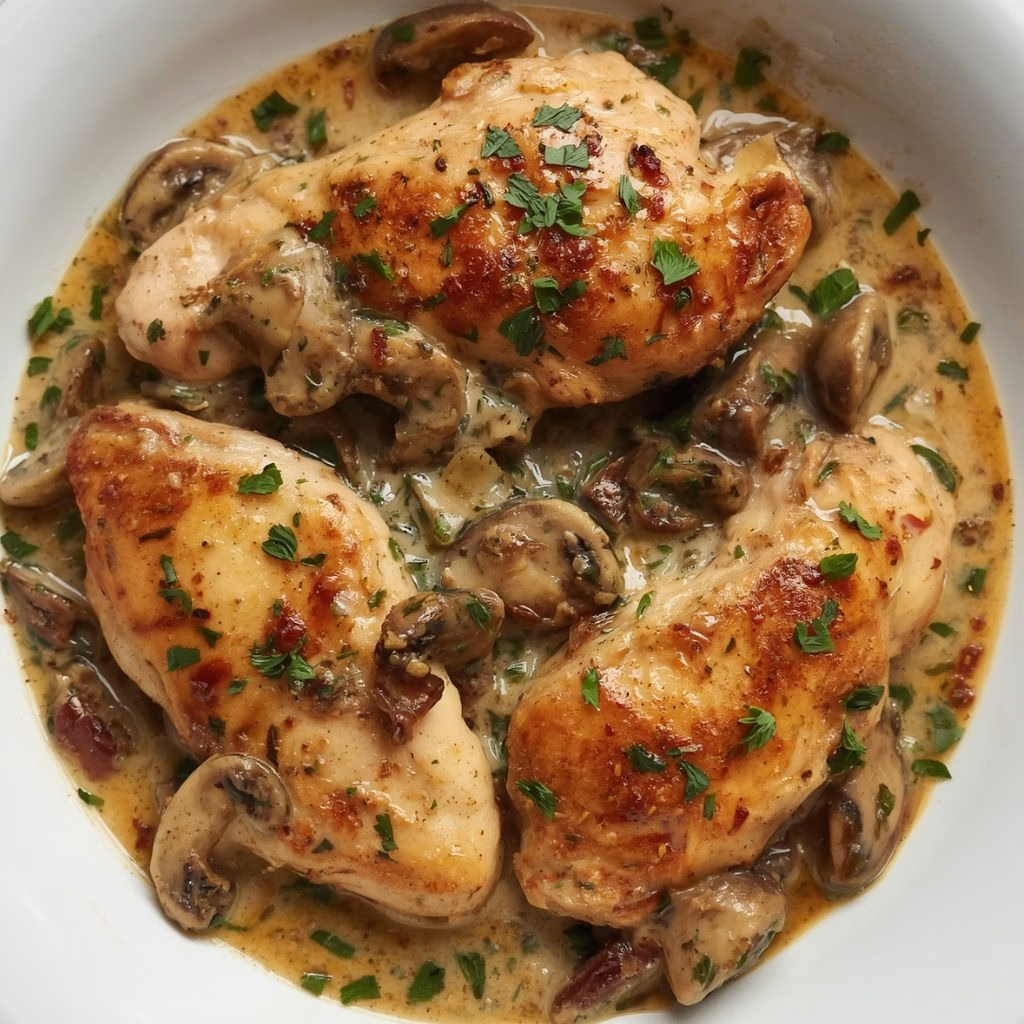
I start by patting the chicken breasts dry and seasoning both sides generously with salt and pepper. Drying the chicken first helps it brown properly instead of steaming in the pan. I heat the olive oil in a large skillet over medium-high heat until it shimmers, then add the chicken.
I sear the chicken for about four to five minutes per side, just until it turns golden brown. It does not need to be fully cooked through at this point, since it will finish simmering in the sauce later. Once browned, I remove the chicken and set it aside on a plate.
Using the same skillet, I add the chopped bacon and cook it until it turns crisp and releases its fat. This step builds a smoky flavor base for the entire sauce. I keep the heat at medium so the bacon renders slowly instead of burning.
Once the bacon is crisp, I add the halved mushrooms directly into the pan. I let them cook undisturbed for a couple of minutes so they can brown properly. Stirring too often at this stage keeps the mushrooms from developing that deep, savory color.
Next, I stir in the sliced garlic and cook it for about a minute, just until it becomes fragrant. Garlic burns quickly, so I keep a close eye on it and stir constantly during this short window. Burnt garlic can turn the whole sauce bitter.
I then pour in the white wine, scraping up all the browned bits stuck to the bottom of the pan. This step, called deglazing, pulls all that concentrated flavor into the sauce. I let the wine simmer for two to three minutes so the alcohol cooks off and the liquid reduces slightly.
Once the wine has reduced, I pour in the chicken broth and heavy cream, stirring everything together until it looks smooth and combined. The sauce will look thin at first, but it thickens as it simmers. I taste it here and adjust the salt and pepper if needed.
I bring the sauce to a gentle simmer, never a rolling boil, since boiling cream can cause it to separate. Patience really pays off in this step, because a slow simmer gives the sauce time to develop a velvety consistency.
I nestle the seared chicken breasts back into the skillet, spooning some of the sauce over the top of each piece. This allows the chicken to finish cooking gently while soaking up all that flavor. I cover the pan partially so the sauce keeps reducing without drying out.
I let everything simmer together for another eight to ten minutes, or until the chicken reaches an internal temperature of 165°F. Right before serving, I sprinkle on fresh parsley or chives for a pop of color and a fresh finishing note.