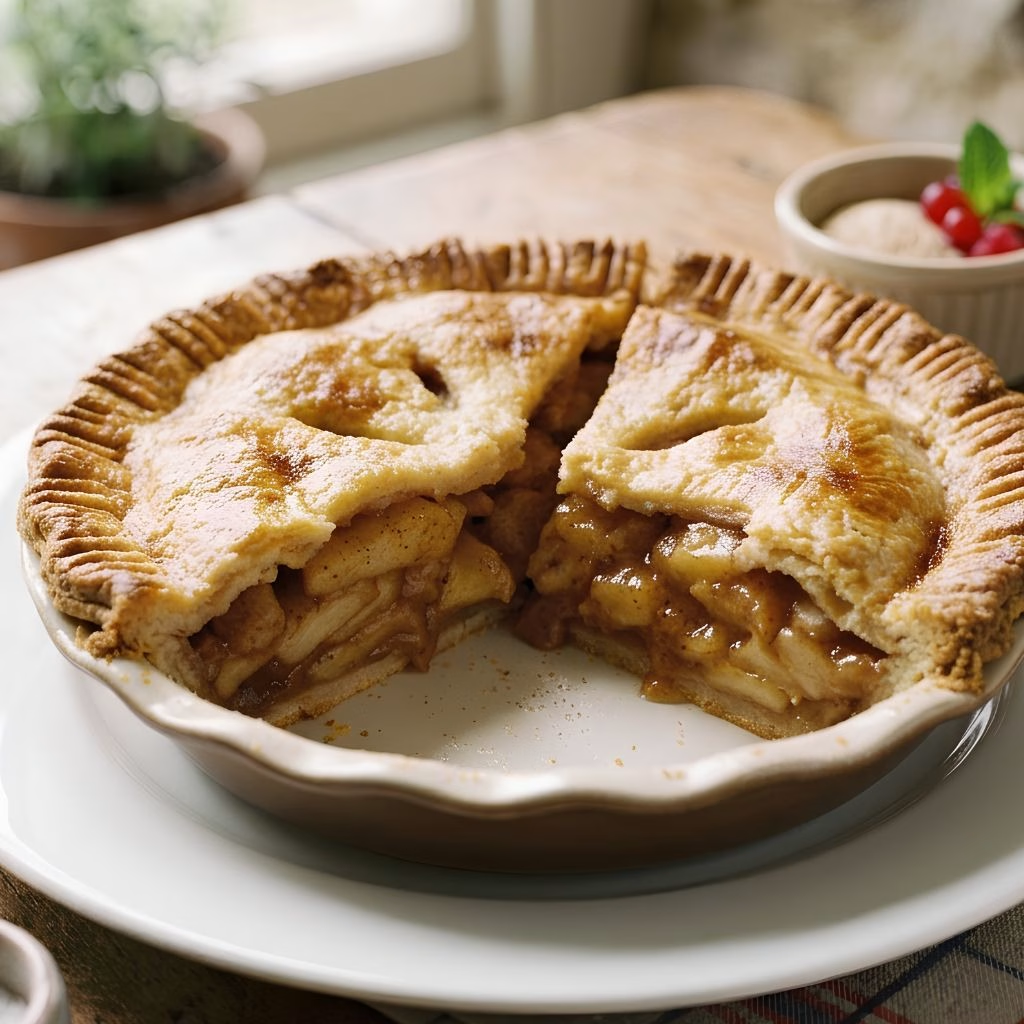
I start by whisking the flour, sugar, and salt together in a large bowl. This spreads the salt and sugar evenly through the flour so I don't get any bland or overly salty bites later. It only takes about 30 seconds, but it matters more than people think.
Next, I add my diced cold butter and use a pastry cutter (or just my fingers) to work it into the flour. I stop once the mixture looks like coarse crumbs with some pea-sized butter chunks still visible. Those little butter pockets are exactly what create the flaky layers later.
I sprinkle in the ice water one tablespoon at a time, tossing gently with a fork after each addition. I stop as soon as the dough starts holding together when I squeeze a handful. Adding water too fast is one of the easiest ways to end up with a tough crust.
Once the dough comes together, I turn it onto my counter and divide it into two equal portions. I shape each one into a flat disc, wrap tightly in plastic wrap, and chill for at least one hour. This resting time lets the gluten relax and the butter firm back up.
After chilling, I flour my counter and rolling pin, then roll one disc from the center outward, rotating a quarter turn after each pass. I keep rolling until it's about 1/8-inch thick and roughly 2 inches wider than my pie plate on all sides.
I roll the dough loosely around my rolling pin, then unroll it gently over my pie plate. I press it into the corners without stretching it, trim the excess, and crimp the edges with my fingers or a fork for that classic finished look.
I pop the shaped crust into the fridge or freezer for 15 minutes before baking this keeps the edges from slumping. For a blind-baked crust, I prick the bottom with a fork, line it with parchment and pie weights, then bake at 425°F until lightly golden.