Go Back
Easy Parker House Roll Recipe
Ash Tyrrell

Easy Parker House Roll Recipe

I still remember the first time I pulled a tray of these rolls out of my oven. My whole kitchen smelled like a bakery, and I honestly couldn't wait for dinner to be over so I could tear into another one. I've tried a traditional parker house roll recipe a dozen different ways over the years, and this version is the one I keep coming back to because it's simple enough for a weeknight yet fancy enough for Thanksgiving.
Total Time 2 hours 15 minutes
Servings: 10

Ingredients
  

  • 1 1/2 cups whole milk – warms the dough and keeps the crumb soft and tender
  • 1/2 cup unsalted butter cut into pieces, plus extra for brushing – adds richness and that classic buttery flavor
  • 1/3 cup granulated sugar – feeds the yeast and gives the rolls a gentle sweetness
  • 2 1/4 teaspoons active dry yeast or one packet – the key to a tall, fluffy rise
  • 1/2 cup warm water about 110°F – activates the yeast, so don't use water that's too hot
  • 3 large eggs lightly beaten – binds the dough and adds structure plus color
  • 1 1/2 teaspoons fine salt – balances the sweetness and strengthens the gluten
  • 6 cups all-purpose flour plus more for dusting – gives the dough its body, so measure by spooning it into the cup
  • Flaky sea salt for topping (optional) – adds a pretty finishing crunch

Method
 

  1. I start by heating the milk in a small saucepan until it just begins to simmer, then pull it off the heat right away. I stir in the butter and sugar until they melt completely into the warm milk. Letting this mixture cool slightly before the next step keeps the yeast from dying from the heat.
  2. While the milk mixture cools, I stir the yeast into the warm water in a small bowl or cup. I let it sit for about five minutes until it turns foamy and fragrant. If it doesn't foam up, my yeast is usually expired, so I start over with a fresh packet.
  3. In the bowl of my stand mixer, I combine the cooled milk mixture, the yeast mixture, the beaten eggs, salt, and about half the flour. I mix on low until it's smooth, then slowly add the rest of the flour until a soft, shaggy dough forms.
  4. I switch the mixer to medium speed and let the dough hook knead the dough for about five to seven minutes. The dough should look smooth, elastic, and slightly tacky but not sticky to the touch when it's ready.
  5. I transfer the dough to a lightly greased bowl, cover it with plastic wrap or a towel, and set it somewhere warm. This first rise usually takes about an hour, or until the dough has doubled in size nicely.
  6. Once risen, I punch the dough down gently and turn it out onto a floured surface. This is where learning how to shape parker house rolls really pays off I divide the dough into 24 equal pieces and roll each into a smooth, tight ball.
  7. I arrange the shaped balls snugly in a buttered baking dish, cover them loosely, and let them rise again for 30 to 40 minutes. They should look puffy and be touching their neighbors by the time they're ready for the oven.
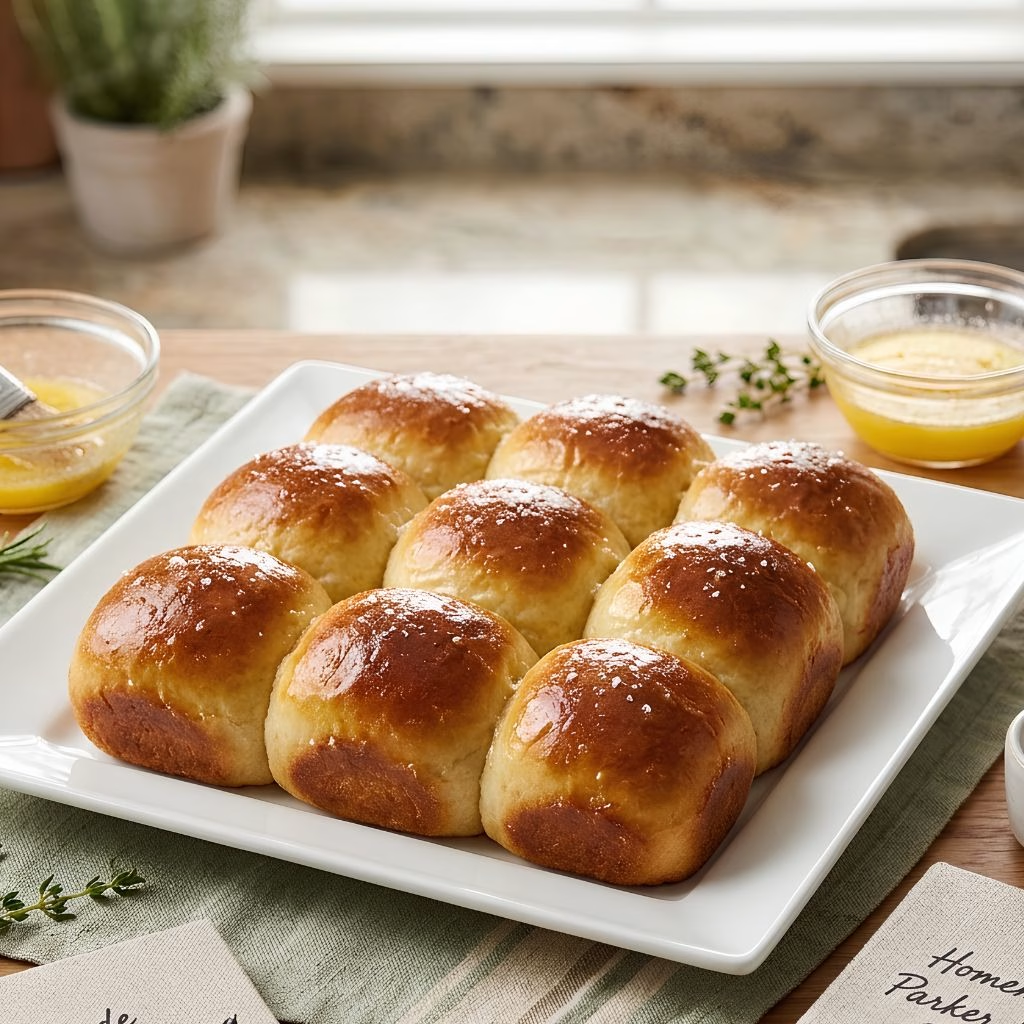
  8. I bake the rolls in a preheated 375°F oven for about 18 to 20 minutes, until they're golden brown on top. The moment they come out, I brush them generously with melted butter so they stay soft and shiny.
Notes

  • I always check that my water isn't too hot before adding the yeast, since anything over 115°F can kill it instantly.
  • I like to let my eggs and butter come to room temperature first, which helps the dough come together more evenly for me.
  • I brush the rolls with butter twice once right after baking and once more before serving because it makes them taste extra indulgent.
  • I set my oven light on and let the dough rise inside with the door closed; it creates a warm, draft-free spot that speeds things up for me.
  • I weigh my flour instead of scooping it straight from the bag, since that one habit fixed my dense-roll problem for good.