Go Back
German Bee Sting Cake Recipe
Ash Tyrrell

German Bee Sting Cake Recipe

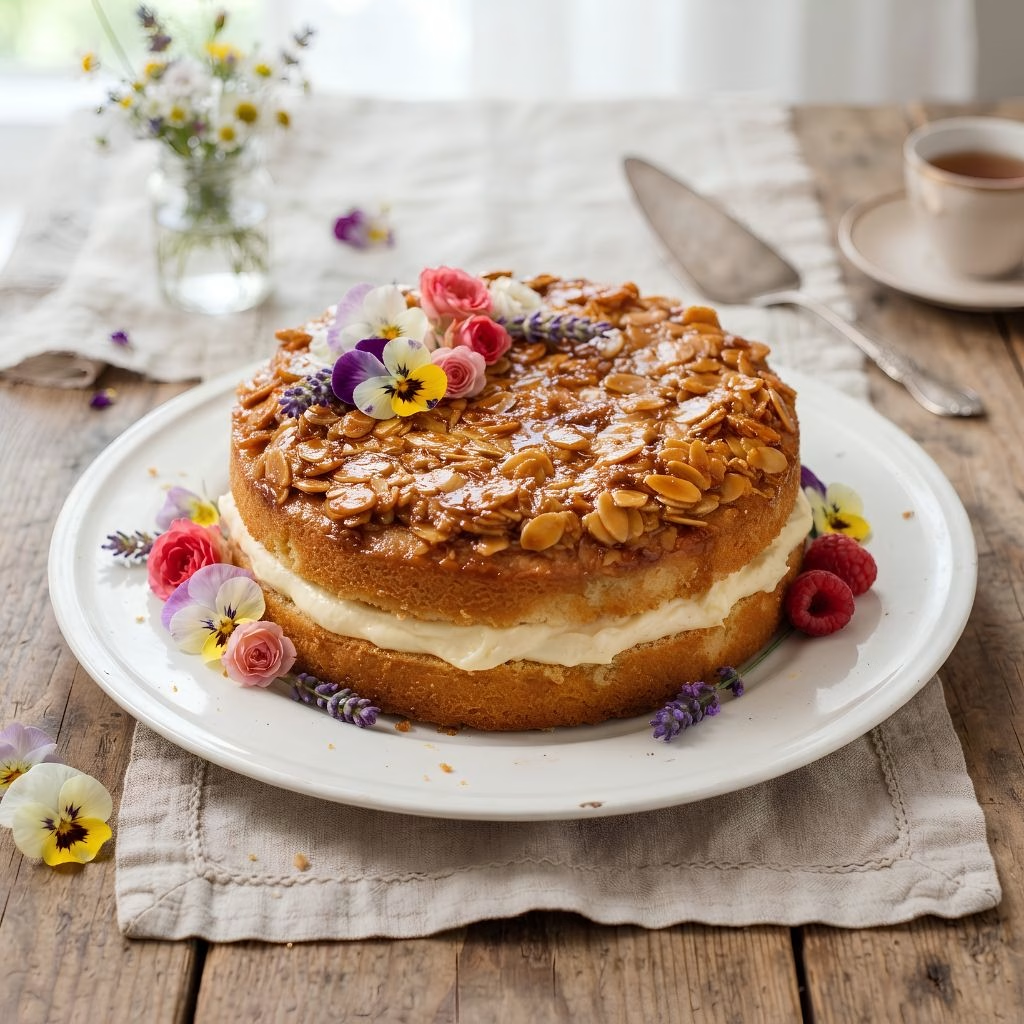
I made this German Bee Sting Cake for the first time when I wanted to bring something truly special to a friend's gathering, and I haven't stopped making it since. The honey-glazed almond topping, the fluffy yeasted layer underneath, and that thick vanilla cream sandwiched in the middle all come together into something that genuinely stuns people.
Total Time 3 hours

Ingredients
  

  • 2 cups all-purpose flour — gives the cake its soft slightly chewy base structure
  • ¼ cup granulated sugar — adds a light sweetness that balances the yeast flavor
  • 2¼ teaspoons active dry yeast — the key to that signature airy bread-like texture
  • 1 teaspoon salt — sharpens the flavor and keeps the dough from tasting flat
  • ¾ cup milk room temperature — cold milk slows down the yeast, so let it warm up first
  • 2 large eggs room temperature — bind the dough and add richness
  • 4 tablespoons butter softened — adds tenderness to the finished layer
  • 3 tablespoons honey — lends a subtle floral sweetness to the dough itself
  • 6 tablespoons butter — forms the base of the sticky caramel coating
  • ⅓ cup granulated sugar — helps the topping turn deep golden and crisp
  • 3 tablespoons honey — this is where that bee sting cake flavor really comes through
  • 2 tablespoons heavy cream — keeps the caramel from hardening into brittle
  • ¼ teaspoon salt — cuts the sweetness just enough
  • 1½ cups sliced almonds — go for sliced not slivered, so they toast evenly and look beautiful on top
  • 2¼ cups heavy cream — whips into a thick pipeable filling without needing gelatin
  • 1 box 5.1 oz instant vanilla pudding mix — this is my shortcut for a stable, no-fuss custard-style filling
  • 1 teaspoon pure vanilla extract — rounds out the filling's flavor

Method
 

  1. Combine the flour, sugar, yeast, and salt in a large bowl, then make a well in the center. Add the eggs, milk, honey, and butter, and stir until a soft dough forms. Cover the bowl and let it rest for 60 minutes; it won't rise much, but that's completely normal.
  2. Butter your cake pan generously and line the bottom with parchment paper. Spread the dough evenly into the pan, cover it, and let it rise a second time for about 45 minutes. This second rest is what develops the cake's final texture.
  3. While the dough rises, melt the butter, sugar, and honey together in a saucepan over medium heat until golden brown. Stir in the heavy cream, salt, and almonds, cooking just until everything turns a light amber color.
  4. Spoon the warm almond topping gently over the risen dough, covering it all the way to the edges without spreading it, since spreading can tear the delicate dough. Bake at 350°F for 25 to 30 minutes, until a toothpick comes out clean.
  5. Let the cake cool completely on a wire rack, then invert it to remove the parchment paper before flipping it back almond-side up. Once fully cooled, use a serrated knife to slice the cake evenly into two layers.
  6. Whisk the heavy cream, pudding mix, and vanilla extract together until thick. Drizzle honey over the bottom cake layer, spread the filling evenly on top, then gently place the almond-topped layer back on, pressing lightly to seal everything together.
Notes

  • I always make sure my milk, eggs, and butter are truly at room temperature, since cold ingredients slow the yeast way down.
  • I never spread the almond topping with a spatula, I spoon it gently so I don't tear the dough underneath.
  • I like chilling the cake for at least an hour after assembling it, which makes slicing so much cleaner.
  • I always use a serrated knife to split the cake, since a regular knife tends to crush the soft layer.
  • I keep a close eye on the almond topping while it cooks, because it can go from golden to burnt in under a minute.