Go Back
Greek Honey Cake Recipe
Ash Tyrrell

Greek Honey Cake Recipe

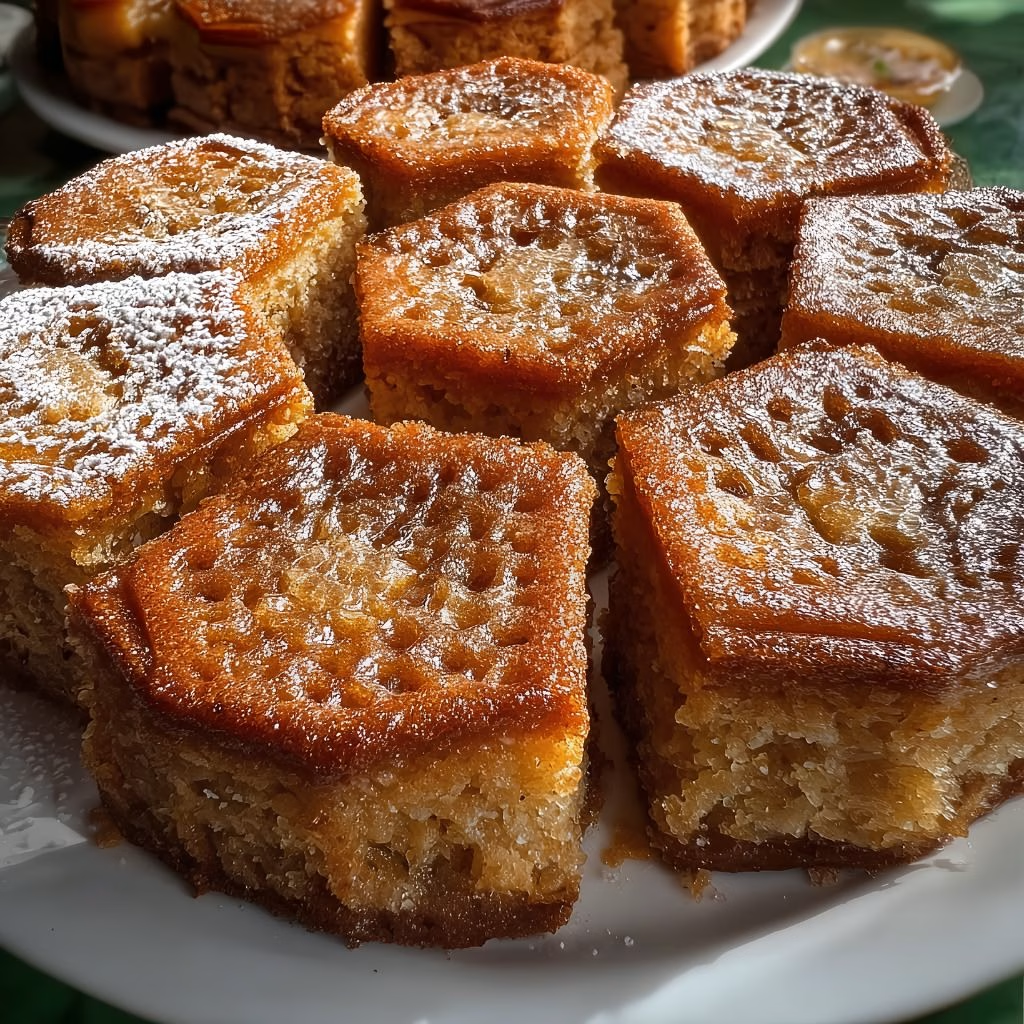
I recently baked this Greek Honey Cake, and it quickly became one of my favorite homemade desserts. The combination of warm cinnamon, citrus zest, crunchy walnuts, and rich honey syrup creates a flavor that reminds me of a simplified baklava-inspired cake. What I love most is how the syrup soaks into every bite, making the cake incredibly moist and fragrant
Total Time 1 hour
Servings: 9

Ingredients
  

  • 1 cup all-purpose flour – Provides structure while keeping the cake tender.
  • teaspoons baking powder – Helps the cake rise evenly for a light texture.
  • ¼ teaspoon salt – Balances sweetness and enhances flavor.
  • ½ teaspoon ground cinnamon – Adds warm spice that complements the honey beautifully.
  • 1 teaspoon orange zest – Freshly grated zest gives the cake a bright citrus aroma.
  • ¾ cup unsalted butter softened – Soft butter creams more easily and creates a fluffy batter.
  • ¾ cup granulated sugar – Sweetens the cake and helps create a tender crumb.
  • 3 large eggs – Use room-temperature eggs for better mixing and volume.
  • ¼ cup milk – Adds moisture and helps combine the batter smoothly.
  • 1 cup chopped walnuts – Provides crunch and a nutty flavor reminiscent of baklava.
  • 1 cup granulated sugar – Forms the base of the syrup.
  • 1 cup honey – Use good-quality honey for the richest flavor.
  • ¾ cup water – Thins the syrup so it soaks evenly into the cake.
  • 1 teaspoon lemon juice – Adds brightness and prevents the syrup from tasting overly sweet.

Method
 

  1. Preheat your oven to 350°F (175°C). Lightly grease a 9-inch square baking pan and dust it with flour if desired. Preparing the pan ahead of time prevents sticking and makes removing slices much easier later.
  2. In a medium bowl, whisk together the flour, baking powder, salt, cinnamon, and orange zest. Mixing these ingredients first ensures the baking powder and spices distribute evenly throughout the cake. This step helps create consistent texture and flavor.
  3. In a large mixing bowl, beat the softened butter and sugar until the mixture becomes pale and fluffy. This process incorporates air into the batter and helps produce a lighter cake. Don't rush this step because it contributes significantly to the final texture.
  4. Add the eggs one at a time, beating well after each addition. Pour in the milk and continue mixing until everything is smooth. The batter should look creamy and well blended without any visible streaks.
  5. Gradually add the dry ingredient mixture to the wet ingredients. Stir gently until just combined to avoid overmixing. Overworking the batter can lead to a dense cake rather than a soft and tender crumb.
  6. Add the chopped walnuts and fold them evenly into the batter using a spatula. The walnuts provide texture and a delicious nutty flavor. Make sure they are distributed throughout the mixture for balanced bites.
  7. Pour the batter into the prepared baking pan and spread it evenly. Bake for approximately 40 minutes or until a toothpick inserted into the center comes out clean. The top should be lightly golden and slightly firm to the touch.
  8. Allow the cake to cool in the pan for about 15 minutes. Once slightly cooled, cut it into squares or diamond-shaped pieces. Slicing before adding the syrup helps the sweet liquid penetrate every section more effectively.
  9. Combine sugar, honey, and water in a saucepan over medium heat. Simmer gently for about 5 minutes, then stir in the lemon juice and cook for another couple of minutes. The syrup should be smooth, glossy, and slightly thickened.
  10. Slowly pour the warm honey syrup over the sliced cake. Allow the cake to rest so it can absorb the syrup completely. As it sits, the flavors deepen and the texture becomes wonderfully moist and tender.
Notes

  • I always use freshly grated orange zest because bottled citrus flavor never tastes as vibrant.
  • I toast the walnuts for a few minutes before adding them to the batter to enhance their flavor.
  • I prefer pouring warm syrup over a slightly warm cake, which helps absorption without making it soggy.
  • I let the cake rest for at least an hour before serving so the syrup distributes evenly.
  • I use high-quality honey whenever possible because it becomes the dominant flavor of the dessert.
  • I avoid overmixing the batter to keep the cake soft and light.
  • I sometimes add a small pinch of extra cinnamon for a richer aroma.