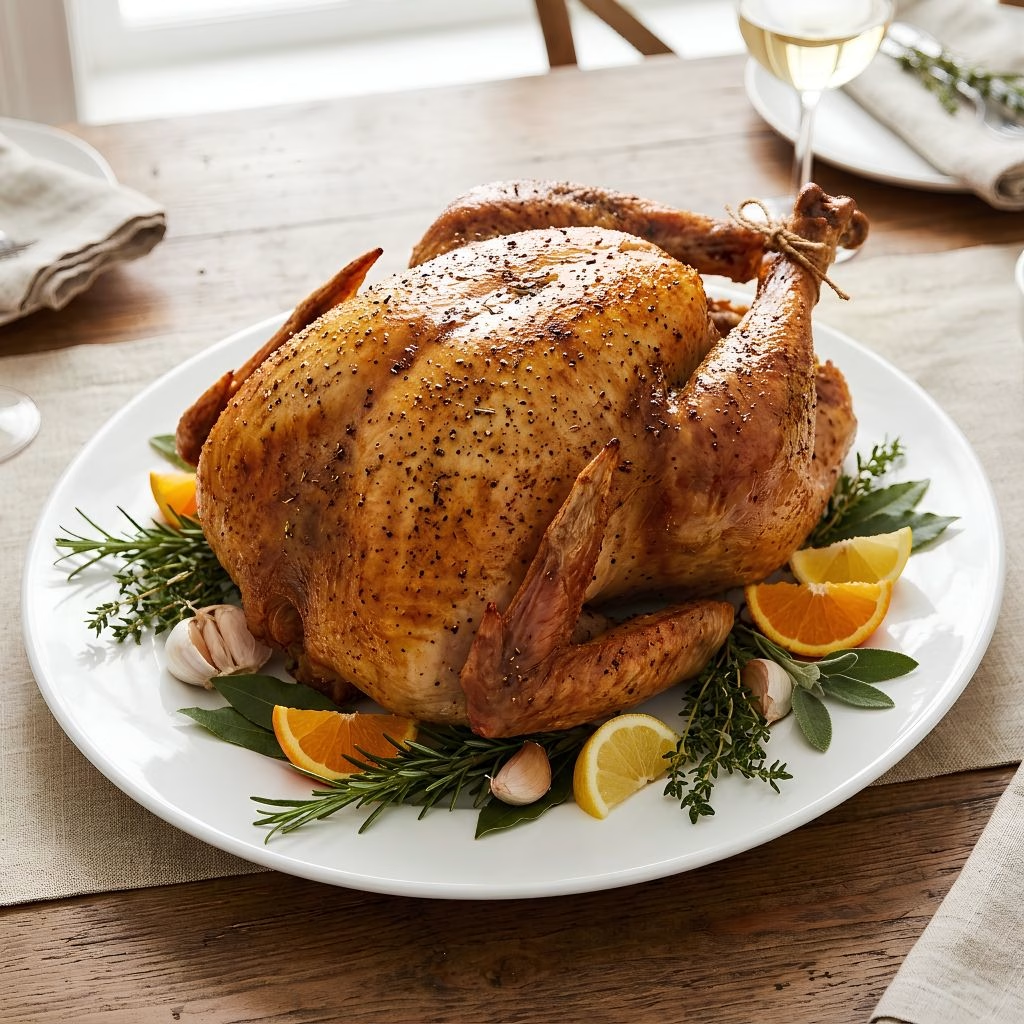
Place the frozen turkey in a foil pan and thaw it in the fridge for 3 to 4 days. About an hour before cooking, set it on the counter to take off the chill. Remove the neck and giblets from the cavity.
Skip the rinse, since it only spreads germs around your sink. Pat the turkey dry inside and out with paper towels until the skin feels tacky. Season the cavity generously with salt and pepper.
Heat your oven to 325°F and set the turkey on a rack in the roasting pan. Fill the cavity with onion, halved garlic, lemon, orange, and the herb stems. These flavors steam gently and keep the meat moist.
Mix 4 tablespoons of softened butter with the garlic paste, sage, parsley, rosemary, thyme, salt, and pepper. Stir until the herbs are evenly spread. This is how to make garlic butter for turkey with almost no effort.
Gently slide your fingers between the skin and the breast to loosen it. Do the same over the legs, taking care not to tear the skin. Spread the herb butter evenly under the skin, which is the heart of any herb butter under turkey skin recipe.
Tuck the wing tips under the bird and tie the legs together with twine. Rub the remaining 4 tablespoons of softened butter over the outside. Season the whole turkey liberally with salt and pepper.
Roast the turkey at 325°F for 2 hours. Then raise the oven to 425°F and roast for 30 to 60 more minutes, depending on the size. This final blast gives the skin its deep golden color.
Start checking at the 2-hour mark. The breast should reach at least 165°F, and the thickest part of the thigh should hit 170 to 175°F. Don't pull the bird early.
Leave the turkey uncovered on the counter for 45 minutes to 1 hour. The juices settle back into the meat during this time. Carving too soon sends all that moisture onto the cutting board.
Once rested, tuck a few fresh herb sprigs around the turkey. The oven heat wilts the original herbs, so fresh ones look much prettier. Carve and bring it to the table