Go Back
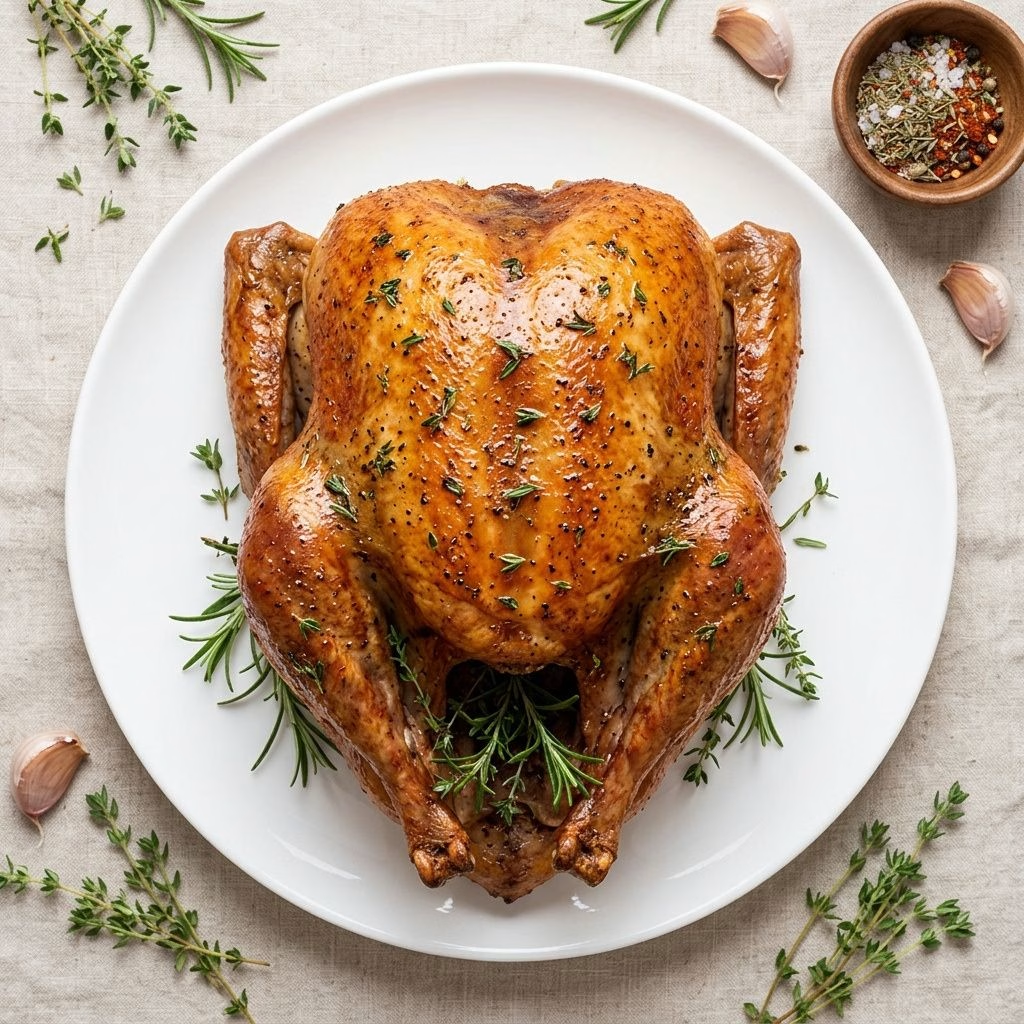
Juicy Roast Turkey Recipe
Ash Tyrrell

Juicy Roast Turkey Recipe

I've roasted more turkeys than I can count over the years, and I can tell you this straight away: the secret isn't butter, basting, or luck. It's brining. The first time I dry brined a turkey instead of wrestling with a giant bucket of salty water, I honestly couldn't believe how much juicier it turned out.
Total Time 2 days 2 minutes
Servings: 10

Ingredients
  

  • 10 lb / 5 kg whole turkey fully or partially thawed — a plain turkey, never a pre-brined or "self-basting" one
  • 2 1/2 tablespoons kosher salt — this is what pulls moisture in and keeps every bite tender
  • 2 teaspoons dried thyme — adds a warm earthy base note under the skin
  • 1 teaspoon paprika — gives the skin a gorgeous golden-red tint as it roasts
  • 1 teaspoon garlic powder — a subtle savoury boost that works through the whole bird
  • 1/2 teaspoon black pepper — just enough to balance the salt without overpowering it
  • 2 heads garlic halved — roasted whole, these turn sweet and mellow and flavour the pan juices
  • 1 onion halved, skin on — forms the base of a rich, deeply flavoured gravy later
  • 2 small bunches mixed herbs sage, rosemary, thyme, parsley — one goes inside the turkey, one into the pan for aroma
  • 10 tablespoons 150 g unsalted butter, melted — this is what gives that irresistible glossy, crisp skin
  • 1 tablespoon finely chopped sage rosemary and thyme — added late so the herbs don't scorch
  • 3 garlic cloves minced — mixed into the final butter baste for a punch of flavour
  • 1 1/2 cups dry white wine or water — keeps the pan juices loose and adds depth to the gravy
  • Salt and pepper to taste
  • 4 cups low-sodium chicken broth — the backbone of a smooth flavourful gravy
  • 5 tablespoons plain flour — thickens the gravy without clumping if whisked in slowly
  • Salt and pepper to taste

Method
 

  1. I start by stirring together the kosher salt, dried thyme, paprika, garlic powder and black pepper in a small bowl. This simple mix is doing all the heavy lifting here, so make sure it's well combined before it touches the turkey.
  2. I pat the turkey completely dry with paper towels, inside and out, and remove the giblets from the cavity. A dry surface helps the salt rub stick properly and also helps the skin crisp up later in the oven.
  3. I sprinkle a little rub inside the cavity first, then flip the turkey over to season the underside, and finally rub the rest generously over the breast and legs, working a bit under the skin if I can. Don't be shy with the breast — it needs the most help staying juicy.
  4. Next, I wrap the turkey tightly in cling wrap, almost like a mummy, so the salt stays pressed against the skin. It goes into the fridge, breast-side down, for 48 hours, and I flip it over halfway through that time.
  5. About 30 minutes before roasting, I unwrap the turkey and pat off any extra moisture. The skin should look slightly tacky, not wet. I leave it out briefly so it isn't ice-cold going into the oven.
  6. I lay the onion and garlic halves in the roasting pan and set a rack on top. Inside the turkey cavity, I stuff a bundle of fresh herbs, a couple of garlic halves and a few tablespoons of butter for extra flavour as it roasts.
  7. I place the turkey breast-side down on the rack, brush it with melted butter, and roast it at a high temperature for 30 minutes. Starting upside down lets the juices settle into the breast meat, which is usually the driest part.
  8. Using clean kitchen towels, I carefully flip the turkey breast-side up, brush it again with butter, and drop the oven temperature. This is where the bird really starts turning that gorgeous golden colour.
  9. Partway through roasting, I mix the remaining butter with minced garlic and chopped herbs, then brush it generously over the skin. Adding it now, rather than earlier, stops the garlic from burning.
  10. Once the thickest part of the thigh reads 165°F / 75°C on a meat thermometer, I pull the turkey out, loosely tent it with foil, and let it rest for a full 30 minutes before carving. This resting step is non-negotiable for juicy meat.
Notes

  • I always use a thermometer instead of guessing it's saved me from both dry and undercooked turkey more than once.
  • I never skip the resting time, even when everyone at the table is hungry and staring at the bird.
  • I keep a close eye on the garlic in the final butter baste, because it burns fast once the skin starts browning.
  • I make sure the turkey is fully thawed on the outside before rubbing on the salt, even if the inside is still a little icy.
  • I save the pan drippings religiously, because that's where all the gravy flavour is hiding.