Go Back
Sourdough Sandwich Bread Recipe
Ash Tyrrell

Sourdough Sandwich Bread Recipe

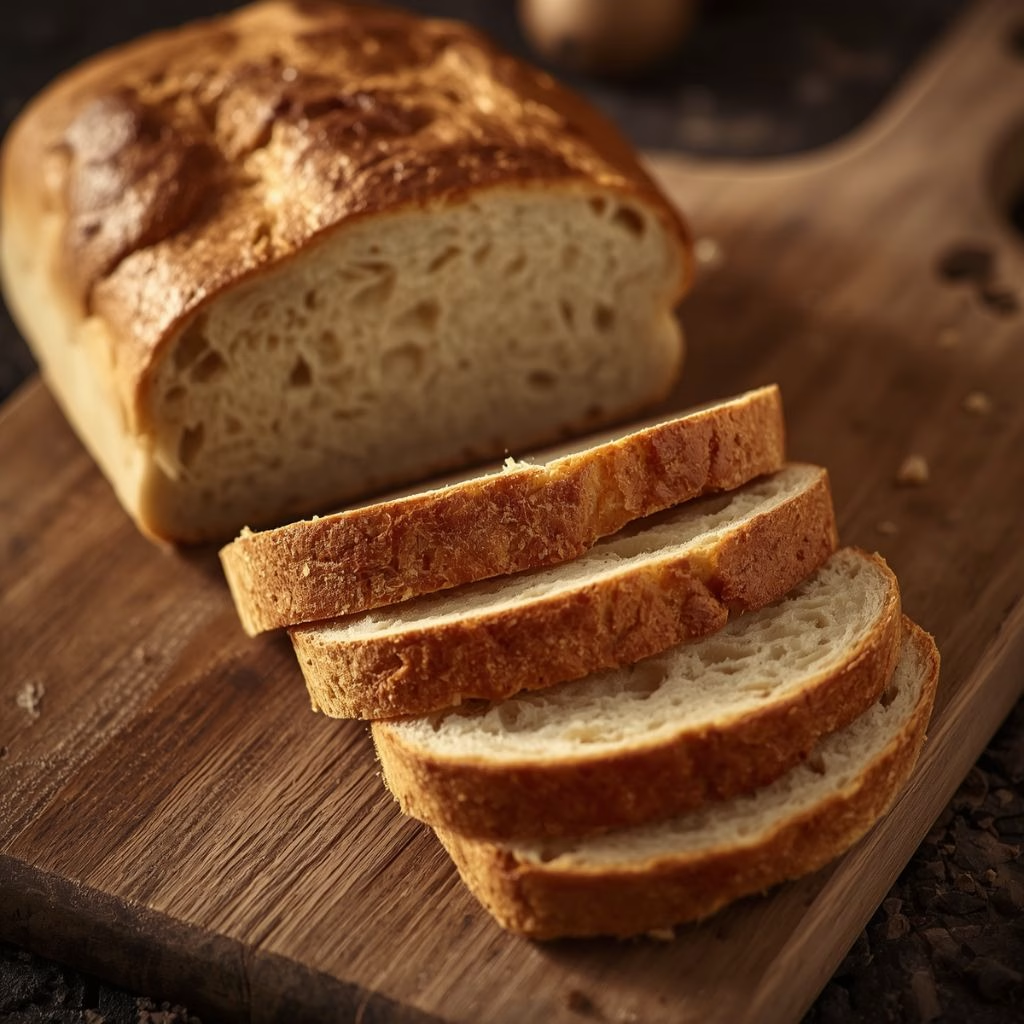
I started baking this loaf on a random Tuesday night, mostly because I was tired of store-bought bread turning stale after two days. I mixed the dough before bed, and by morning it had puffed up into something that actually looked like real bakery bread
Total Time 12 hours 50 minutes

Ingredients
  

  • 4 cups 500 g all-purpose flour – gives the loaf its soft, tender crumb without too much chew
  • 4 tablespoons 60 g unsalted butter, softened and cubed – softened butter blends smoothly into the flour; cold butter just clumps and won't mix in evenly
  • 1 tablespoon 12 g granulated sugar – helps the crust brown and rounds out the tangy sourdough flavor
  • 9 g fine sea salt – measure this carefully since too much can slow down fermentation
  • 1/4 cup 50 g bubbly, active sourdough starter (100% hydration) – make sure it's freshly fed and doubled in size before you use it, or the dough will struggle to rise
  • 1 cup + 2 tablespoons 270 g warm water – warm (not hot) water helps wake up the starter without killing it

Method
 

  1. Add the flour, softened butter, sugar, and salt to your mixer bowl fitted with the paddle attachment. Mix on low until the butter breaks down into small crumbs throughout the flour. This only takes a minute or two.
  2. Pour in your active starter and warm water, then mix until everything comes together into a shaggy, slightly sticky dough. Cover the bowl and let it rest for 30 minutes before kneading.
  3. Switch to the dough hook and knead on medium-low speed for 6 to 8 minutes, until the dough turns soft and smooth. It shouldn't stick to your hands anymore; if it does, add just a light dusting of flour.
  4. No stand mixer? Knead by hand on a floured surface for about 8 to 10 minutes. Focus on how the dough feels rather than counting minutes exactly.
  5. Cover the bowl tightly with plastic wrap and leave it at room temperature, ideally around 68°F, for 10 to 12 hours. The dough is ready once it looks puffy and has roughly doubled in size.
  6. Warmer kitchens speed this up, while cooler ones slow it down, so watch the dough itself rather than the clock.
  7. Turn the risen dough onto a lightly floured surface and gently press it flat to release the larger air bubbles. Roll it into a tight log, tucking the ends underneath as you go.
  8. With floured hands, pull the dough toward you a few times to build surface tension, then place it seam-side down into a buttered loaf pan.
  9. Cover the pan loosely with oiled plastic wrap and let the dough rise until the center domes about an inch above the rim, which usually takes 1.5 to 2 hours or longer in a cooler kitchen. You're not aiming for double in size here.
  10. Preheat your oven to 375°F (or 500°F, then lower it once the bread goes in for extra oven spring). Bake for 45 to 50 minutes until deeply golden, then cool in the pan briefly before moving the loaf to a wire rack. Let it rest for about an hour before slicing.
Notes

  • I always weigh my ingredients on a kitchen scale instead of using cups. It's made my results so much more consistent, especially with the starter and flour.
  • If my kitchen runs cold, I give the second rise extra time instead of rushing it into the oven early. A dense loaf almost always means it needed more time, not less.
  • I like using softened, not melted, butter. Melted butter changes the texture of the dough and makes it harder to knead properly.
  • Waiting the full hour before slicing was hard for me at first, but it really does keep the inside from turning gummy.
  • When I want a taller loaf, I bake it in a slightly smaller pan. It gives the dough a nice upward push instead of spreading out.