Go Back
Thick And Chewy Peanut Butter Butterfinger Cookies Recipe
Ash Tyrrell

Thick And Chewy Peanut Butter Butterfinger Cookies Recipe

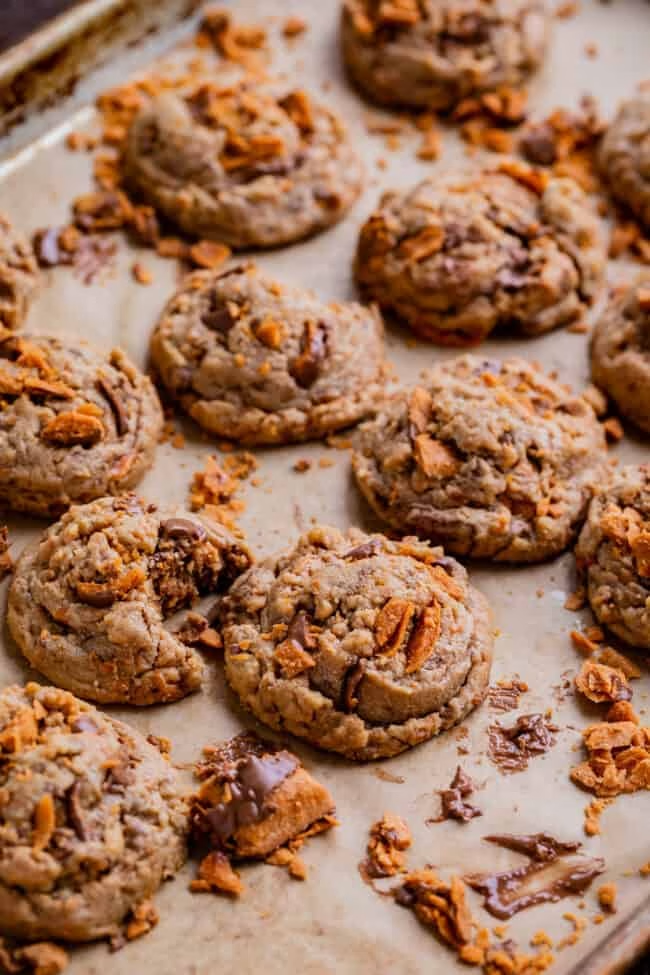
When I baked these thick and chewy peanut butter Butterfinger cookies for the first time, I couldn’t believe how something so simple turned out so extraordinary. I mixed peanut butter, butter, sugar, and a whole lot of Butterfinger candy bits, and the aroma in my kitchen was enough to make me salivate before the oven even beeped.
Total Time 40 minutes

Ingredients
  

  • ¾ cup butter softened (that’s 1 1/2 sticks) — gives richness, helps with chew; softened butter blends better.
  • ½ cup granulated sugar — for sweetness and helps with the crisp-edges.
  • ½ cup brown sugar packed — adds moisture and depth of flavor.
  • 1 cup peanut butter — regular non-natural peanut butter works best; natural can be runnier and alter texture.
  • 1 large egg — binds everything together.
  • teaspoons vanilla extract — enhances flavor.
  • cups all-purpose flour spooned and leveled — too much flour makes cookies dry; spoon & level ensures accuracy.
  • ½ teaspoon baking soda — gives lift and helps spread.
  • ½ teaspoon baking powder — for extra rise and a lighter interior.
  • ¼ teaspoon kosher salt — balances sweetness.
  • 16 ounces Butterfinger candy chopped — gives the crispety, crunchety texture; use either Butterfinger Bits or chopped candy bars.

Method
 

  1. First, beat together the softened butter with both granulated sugar and packed brown sugar until the mixture is light and fluffy. Scrape down the bowl’s sides so everything mixes evenly. This step adds air and helps with that soft-chewy texture.
  2. Next, stir in the peanut butter until smooth, then add the egg and vanilla and mix just until combined. Don’t over-mix or you risk tough cookies. Use a scrape of the spatula to gather the mixture from the sides so everything’s uniformly blended.
  3. In goes the flour (spooned & leveled), followed by baking soda, baking powder, and salt. Mix gently at first, then more fully but just until the dough comes together. Leave faint streaks of flour early on so you don’t overwork the dough.
  4. Once the dough is nearly together, stir in the chopped Butterfinger pieces or Butterfinger Bits until just dispersed. You want good chunks so you get crunchy bits, but not too much so the dough becomes hard to shape.
  5. Cover the dough and chill in the fridge for 15 minutes (or up to 24 hours if you plan ahead). Chilling firms up the dough so the cookies don’t spread too thin. I’ve skipped chilling in a pinch, but chilling always gives a better shape.
  6. Preheat the oven to 350°F (about 175°C); line baking sheets. Scoop 2-inch balls of dough, place them apart to give room for spreading. Bake for about 10 minutes; edges should look set, middle still soft. If cookies haven’t spread much, gently press down with a spatula after removing from the oven. Let cookies rest on a baking sheet for 5 minutes, then move to a wire rack to cool fully.
Notes

  • I always weigh flour or spoon & level it, because too much flour makes the cookies dry and crumbly.
  • I let the dough rest chilled; chilling overnight enhances flavor and helps improve texture.
  • Right after taking cookies out of the oven, I sometimes do the “spoon trick” (pressing cookies gently) to get the thick, fudgy center.
  • If using Butterfinger bars instead of bits, I chop them to roughly the same size for consistency. These cookies were inspired by the original Butterfinger cookies that started my obsession, so using good-quality candy really matters.
  • I bake them in a single layer, and only put 12 per sheet so they don’t crowd; less crowding = more even baking.