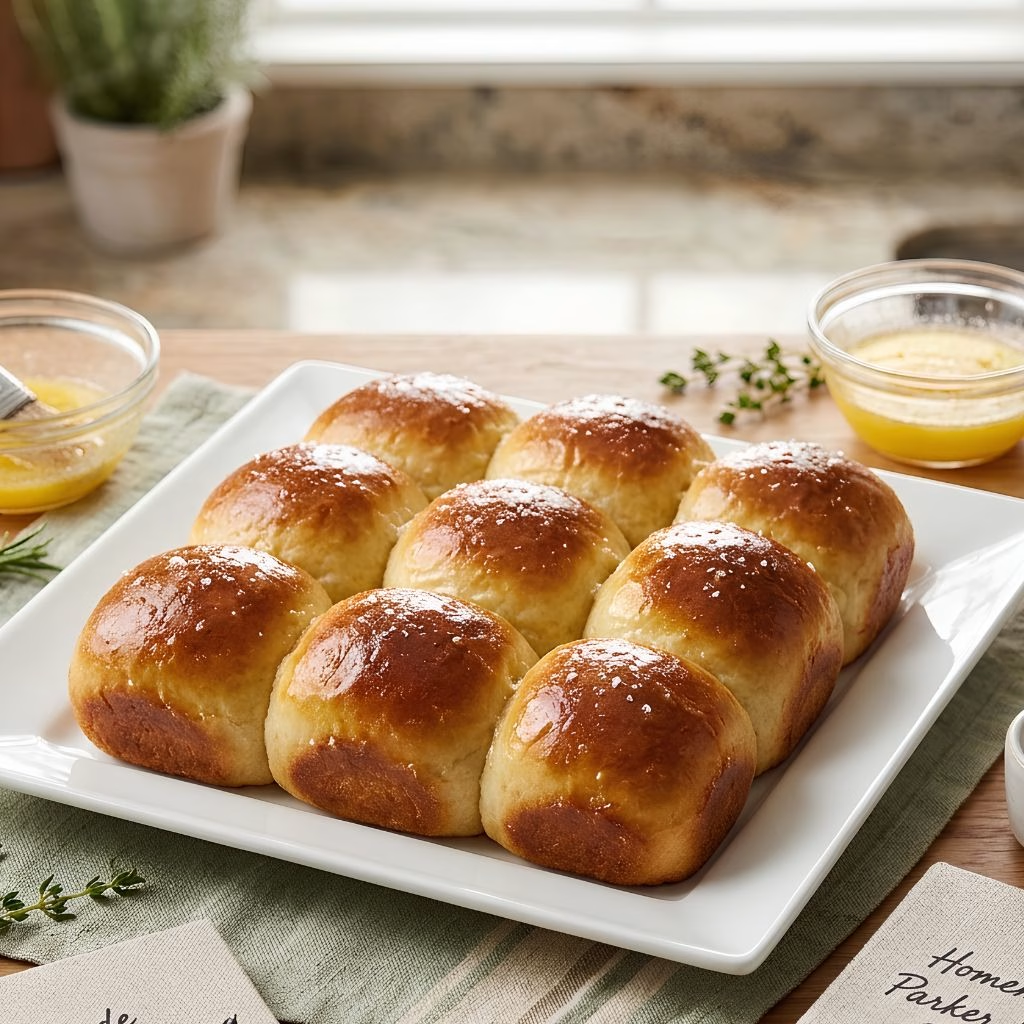
I still remember the first time I pulled a tray of this Easy Parker House Roll Recipe out of my oven. My whole kitchen smelled like a bakery, and I honestly couldn’t wait for dinner to be over so I could tear into another one.
I’ve tried a traditional parker house roll recipe a dozen different ways over the years, and this version is the one I keep coming back to because it’s simple enough for a weeknight yet fancy enough for Thanksgiving.
If you’ve ever bookmarked a pioneer woman parker house rolls recipe and never got around to making it, trust me, this one will finally get you into the kitchen.
I like to keep a batch of these next to my KFC Mashed Potatoes recipe on busy family dinner nights because the two just work so well together. Once you taste that soft, pillowy texture with the golden butter brushed on top, you’ll understand why I call this my best parker house rolls recipe.
Cooking Time
- Prep Time: 25 minutes
- Cooking Time: 20 minutes
- Total Time: 2 hours 15 minutes (includes rising time)
Ingredients
- 1 1/2 cups whole milk – warms the dough and keeps the crumb soft and tender
- 1/2 cup unsalted butter, cut into pieces, plus extra for brushing – adds richness and that classic buttery flavor
- 1/3 cup granulated sugar – feeds the yeast and gives the rolls a gentle sweetness
- 2 1/4 teaspoons active dry yeast (or one packet) – the key to a tall, fluffy rise
- 1/2 cup warm water (about 110°F) – activates the yeast, so don’t use water that’s too hot
- 3 large eggs, lightly beaten – binds the dough and adds structure plus color
- 1 1/2 teaspoons fine salt – balances the sweetness and strengthens the gluten
- 6 cups all-purpose flour, plus more for dusting – gives the dough its body, so measure by spooning it into the cup
- Flaky sea salt, for topping (optional) – adds a pretty finishing crunch
Note: This recipe makes about 24 rolls and serves 10 to 12 people.
Equipment You Need
- Small saucepan – for warming the milk and melting the butter
- Stand mixer with dough hook – makes kneading the dough effortless
- Large mixing bowl – for letting the dough rise undisturbed
- 9×13-inch baking dish or two round cake pans – gives the rolls that classic pull-apart shape
- Plastic wrap or a clean kitchen towel – covers the dough while it proofs
- Pastry brush – for brushing melted butter over the warm rolls
- Bench scraper or chef’s knife – helps divide the dough evenly
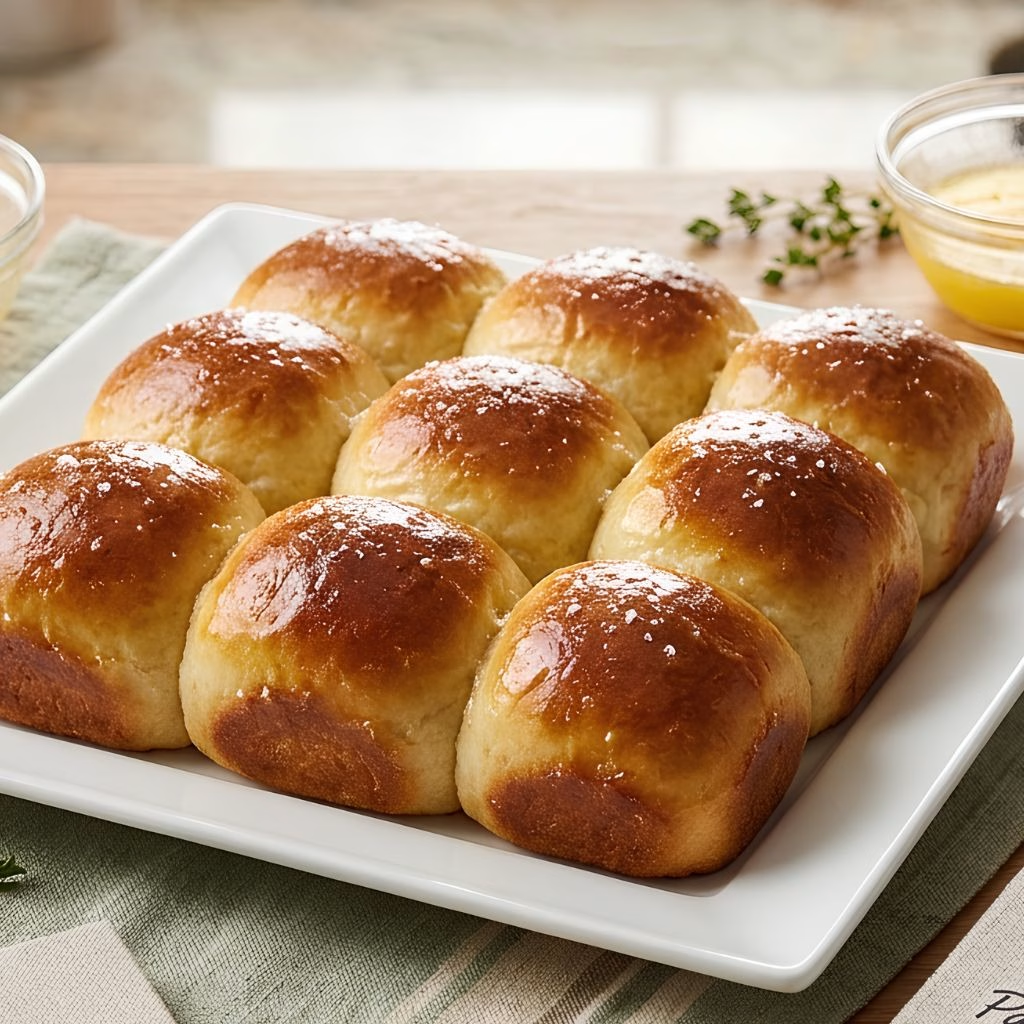
How to Make an Easy Parker House Roll Recipe?
Making these rolls at home is far easier than it looks, and once you’ve done it once, you’ll never be intimidated by yeast dough again. The process is really just warming, mixing, kneading, letting the dough rest, and shaping before baking. I promise each step below is simple enough to follow even if this is your very first time baking bread.
Step 1: Warm the Milk, Butter, and Sugar
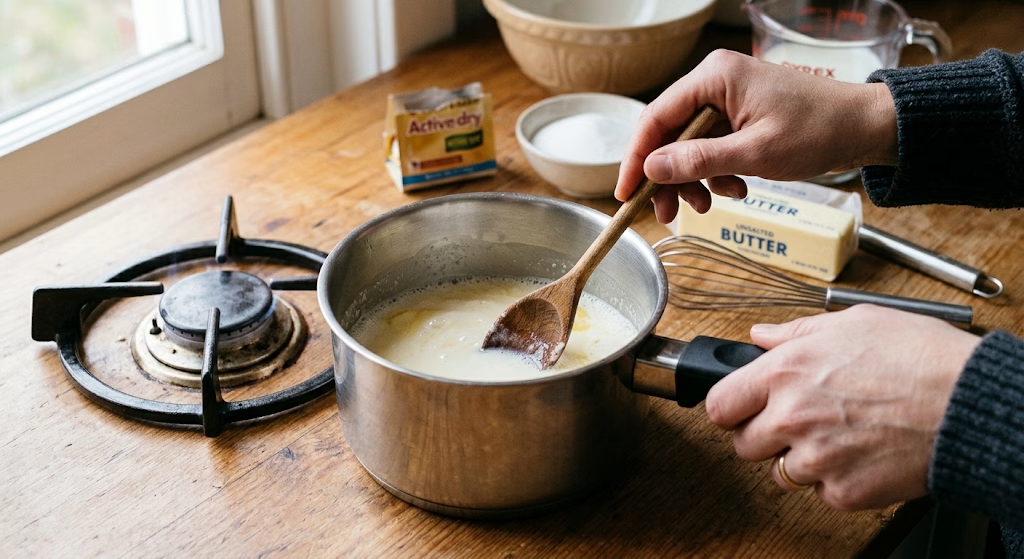
I start by heating the milk in a small saucepan until it just begins to simmer, then pull it off the heat right away. I stir in the butter and sugar until they melt completely into the warm milk. Letting this mixture cool slightly before the next step keeps the yeast from dying from the heat.
Step 2: Activate the Yeast
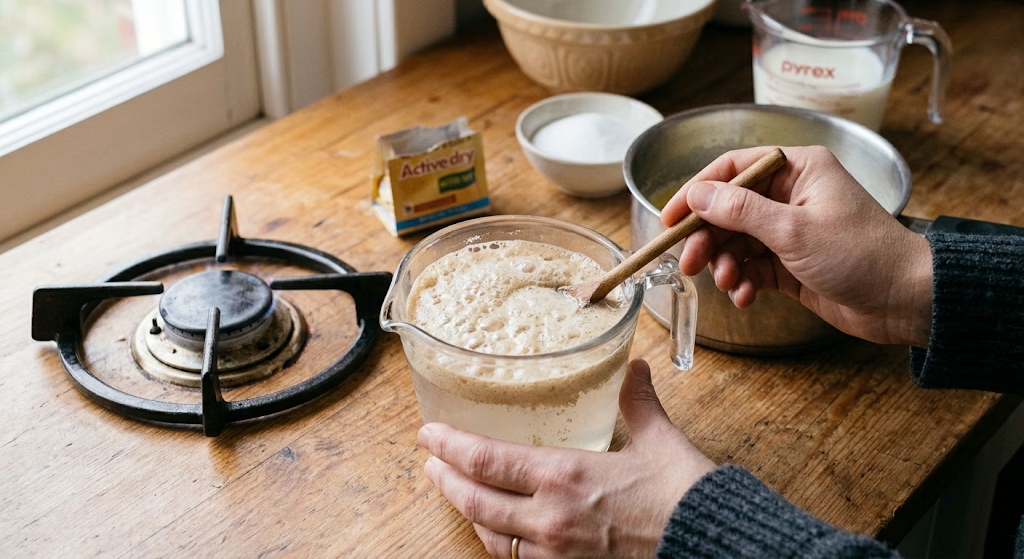
While the milk mixture cools, I stir the yeast into the warm water in a small bowl or cup. I let it sit for about five minutes until it turns foamy and fragrant. If it doesn’t foam up, my yeast is usually expired, so I start over with a fresh packet.
Step 3: Mix the Dough
In the bowl of my stand mixer, I combine the cooled milk mixture, the yeast mixture, the beaten eggs, salt, and about half the flour. I mix on low until it’s smooth, then slowly add the rest of the flour until a soft, shaggy dough forms.
Step 4: Knead Until Smooth
I switch the mixer to medium speed and let the dough hook knead the dough for about five to seven minutes. The dough should look smooth, elastic, and slightly tacky but not sticky to the touch when it’s ready.
Step 5: Let the Dough Rise
I transfer the dough to a lightly greased bowl, cover it with plastic wrap or a towel, and set it somewhere warm. This first rise usually takes about an hour, or until the dough has doubled in size nicely.
Step 6: Shape the Rolls
Once risen, I punch the dough down gently and turn it out onto a floured surface. This is where learning how to shape parker house rolls really pays off — I divide the dough into 24 equal pieces and roll each into a smooth, tight ball.
Step 7: Second Rise
I arrange the shaped balls snugly in a buttered baking dish, cover them loosely, and let them rise again for 30 to 40 minutes. They should look puffy and be touching their neighbors by the time they’re ready for the oven.
Step 8: Bake and Brush with Butter
I bake the rolls in a preheated 375°F oven for about 18 to 20 minutes, until they’re golden brown on top. The moment they come out, I brush them generously with melted butter so they stay soft and shiny.
Additional Tips for Making This Recipe Better
I’ve made these rolls more times than I can count, and these small tweaks genuinely make a difference for me.
- I always check that my water isn’t too hot before adding the yeast, since anything over 115°F can kill it instantly.
- I like to let my eggs and butter come to room temperature first, which helps the dough come together more evenly for me.
- I brush the rolls with butter twice once right after baking and once more before serving because it makes them taste extra indulgent.
- I set my oven light on and let the dough rise inside with the door closed; it creates a warm, draft-free spot that speeds things up for me.
- I weigh my flour instead of scooping it straight from the bag, since that one habit fixed my dense-roll problem for good.
Common Mistakes to Avoid
I learned most of these the hard way, so hopefully this saves you a flat or dense batch.
- I used to add hot milk straight to the yeast, which killed it every time — now I always let it cool to warm, not hot.
- I once rushed the first rise and ended up with dense, heavy rolls, so now I give the dough the full hour it needs.
- I overcrowded my baking dish the first time I tried shaping these, and the rolls baked unevenly, so I now give them a little breathing room.
- I forgot to cover my dough while it rose and it dried out on top, so I always use a damp towel or plastic wrap now.
- I pulled my rolls out too early because they looked golden on the edges, but checking the center color taught me to wait those last couple of minutes.
How to Serve Easy Parker House Rolls?
These rolls are best enjoyed warm, straight from the oven, with butter melting right into the center. I like piling them high in a cloth-lined basket so the steam stays trapped and keeps them soft at the table.
A light dusting of flaky sea salt or a drizzle of honey butter makes them look extra special for guests. They’re the perfect companion to a hearty bowl of soup, a holiday roast, or even my KFC Coleslaw recipe when I want a casual, comforting spread. For a dinner party, I sometimes tuck a few sprigs of fresh herbs around the basket for a pop of color.
Variations
I love how flexible this dough is, so here are a few twists I’ve tried myself.
- Swap the butter and milk for plant-based versions to make a dairy-free batch that still turns out soft.
- Stir a tablespoon of honey into the dough in place of sugar for a deeper, more rounded sweetness.
- Add shredded cheddar and a pinch of garlic powder for a savory, cheesy roll that disappears fast at my table.
- Use instant yeast instead of active dry if you’re after parker house rolls with instant yeast, since it skips the proofing step and saves time.
- Fold in fresh herbs like rosemary or thyme for a fragrant, herby version that pairs beautifully with roasted dinners.
- Try the Williams Sonoma parker house rolls recipe technique of folding the dough over itself before baking for that classic split-top look.
Nutritional Information
Here’s a rough idea of what you’re getting per roll, based on a batch of 24.
- Calories: approximately 150 kcal
- Protein: approximately 4g
- Carbohydrates: approximately 22g
- Fat: approximately 5g
Make Ahead and Storage
You can prep this make ahead parker house rolls recipe the night before by shaping the rolls and refrigerating them overnight, then simply letting them come to room temperature and rise before baking the next day.
Leftover rolls stay soft for about two to three days when stored in an airtight container or sealed bag at room temperature. To reheat, I wrap a few rolls in foil and warm them in a 300°F oven for about ten minutes, which brings back that fresh-baked softness.
These rolls freeze beautifully for up to three months. I let them cool completely, freeze them in a single layer, then transfer to a freezer bag, and simply thaw and reheat whenever I need a quick batch.
Why You’ll Love This Recipe
This recipe has earned a permanent spot in my rotation, and here’s why I think you’ll love it just as much as I do.
- It’s beginner friendly: even if you’ve never worked with yeast before, the step-by-step process makes it nearly impossible to mess up.
- It’s incredibly versatile: I can dress these rolls up for holidays or keep them simple for a weeknight dinner without changing much at all.
- It fits different diets: with a few easy swaps, I can make these dairy-free or add my own flavor twists depending on who’s eating.
- The flavor is unbeatable: that buttery, slightly sweet taste reminds me why homemade will always beat parker house rolls where to buy at the store.
- They reheat like a dream: I can make a big batch ahead of time and still serve warm, fresh-tasting rolls days later.
FAQs
Can I make this dough by hand instead of a stand mixer?
Yes, I’ve done it plenty of times. It just takes about ten minutes of hand-kneading until the dough feels smooth and elastic.
Why didn’t my rolls rise properly?
This usually happens to me when my yeast is old or my kitchen is too cold, so I always double-check the expiration date and find a warmer spot.
Can I freeze the dough instead of the baked rolls?
Absolutely, I shape the rolls, freeze them on a tray, then transfer them to a bag and let them thaw and rise before baking whenever I’m ready.
What’s the best way to get that classic folded shape?
I roll the dough into an oval, brush it with butter, then fold it slightly off-center before pinching the edges, which gives it that signature pull-apart look.
Can I use instant yeast instead of active dry yeast?
Yes, I simply mix it directly into the dry ingredients without proofing it first, and it usually cuts about ten minutes off my prep time.

Easy Parker House Roll Recipe
Ingredients
Method
- I start by heating the milk in a small saucepan until it just begins to simmer, then pull it off the heat right away. I stir in the butter and sugar until they melt completely into the warm milk. Letting this mixture cool slightly before the next step keeps the yeast from dying from the heat.
- While the milk mixture cools, I stir the yeast into the warm water in a small bowl or cup. I let it sit for about five minutes until it turns foamy and fragrant. If it doesn’t foam up, my yeast is usually expired, so I start over with a fresh packet.
- In the bowl of my stand mixer, I combine the cooled milk mixture, the yeast mixture, the beaten eggs, salt, and about half the flour. I mix on low until it’s smooth, then slowly add the rest of the flour until a soft, shaggy dough forms.
- I switch the mixer to medium speed and let the dough hook knead the dough for about five to seven minutes. The dough should look smooth, elastic, and slightly tacky but not sticky to the touch when it’s ready.
- I transfer the dough to a lightly greased bowl, cover it with plastic wrap or a towel, and set it somewhere warm. This first rise usually takes about an hour, or until the dough has doubled in size nicely.
- Once risen, I punch the dough down gently and turn it out onto a floured surface. This is where learning how to shape parker house rolls really pays off I divide the dough into 24 equal pieces and roll each into a smooth, tight ball.
- I arrange the shaped balls snugly in a buttered baking dish, cover them loosely, and let them rise again for 30 to 40 minutes. They should look puffy and be touching their neighbors by the time they’re ready for the oven.
- I bake the rolls in a preheated 375°F oven for about 18 to 20 minutes, until they’re golden brown on top. The moment they come out, I brush them generously with melted butter so they stay soft and shiny.
Notes
- I always check that my water isn’t too hot before adding the yeast, since anything over 115°F can kill it instantly.
- I like to let my eggs and butter come to room temperature first, which helps the dough come together more evenly for me.
- I brush the rolls with butter twice once right after baking and once more before serving because it makes them taste extra indulgent.
- I set my oven light on and let the dough rise inside with the door closed; it creates a warm, draft-free spot that speeds things up for me.
- I weigh my flour instead of scooping it straight from the bag, since that one habit fixed my dense-roll problem for good.