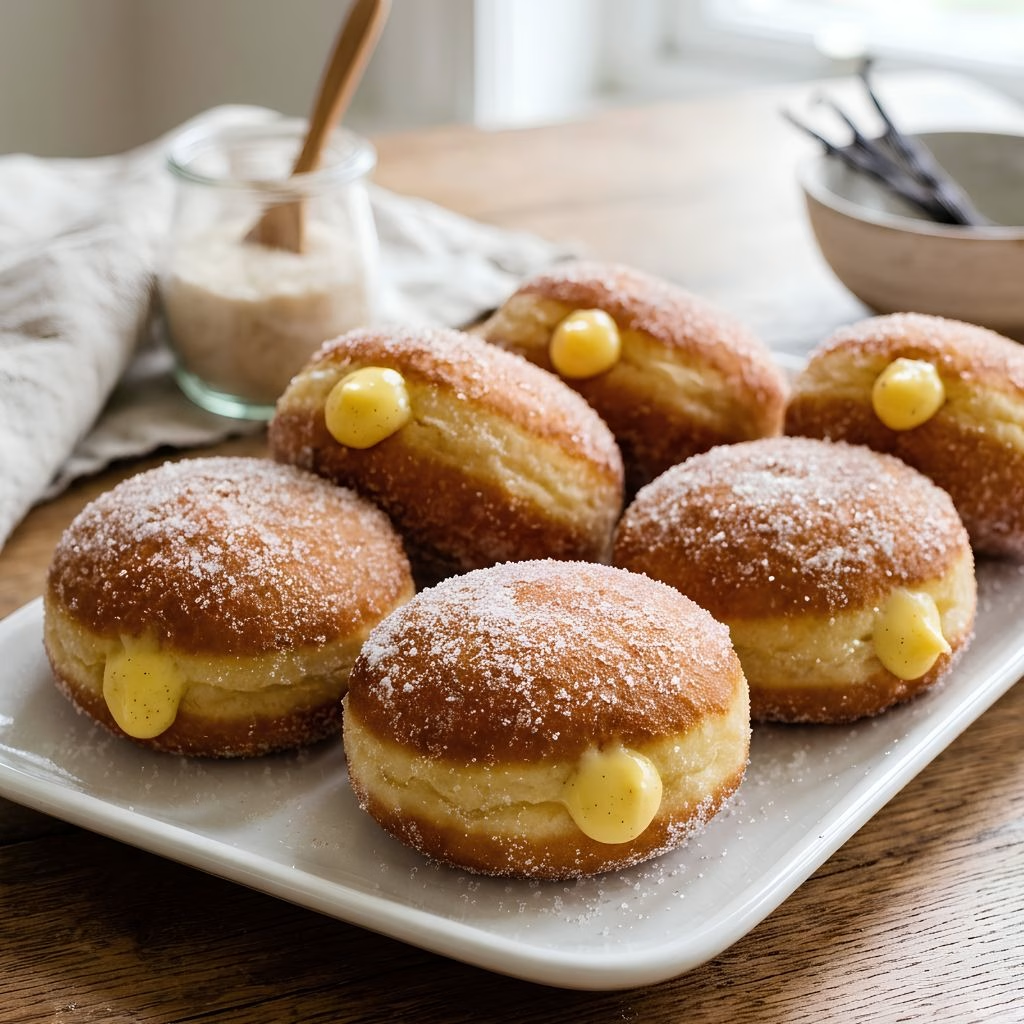
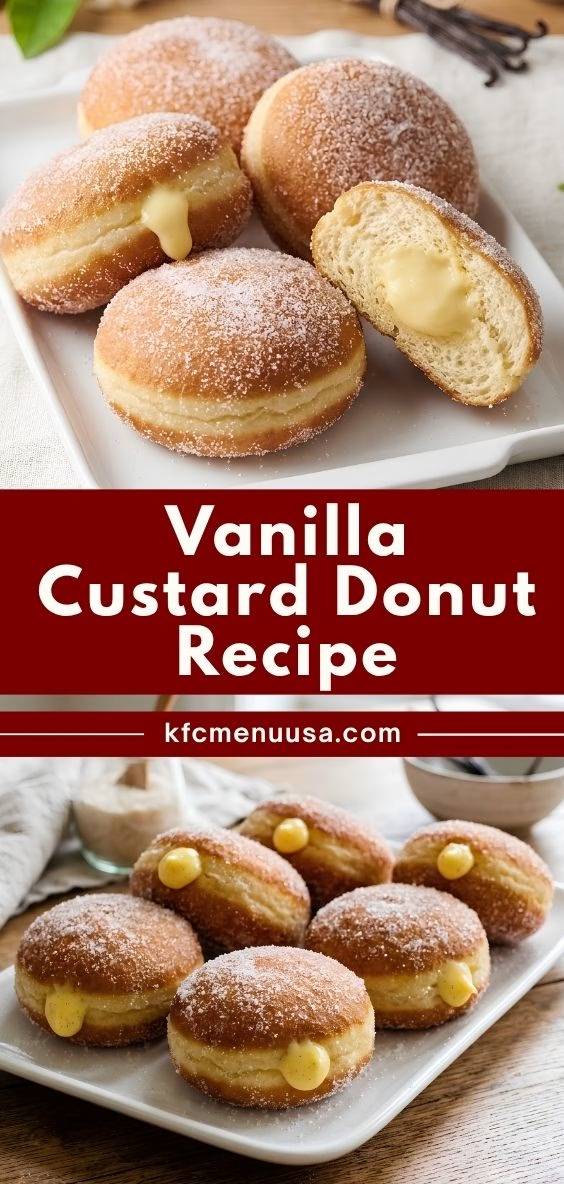
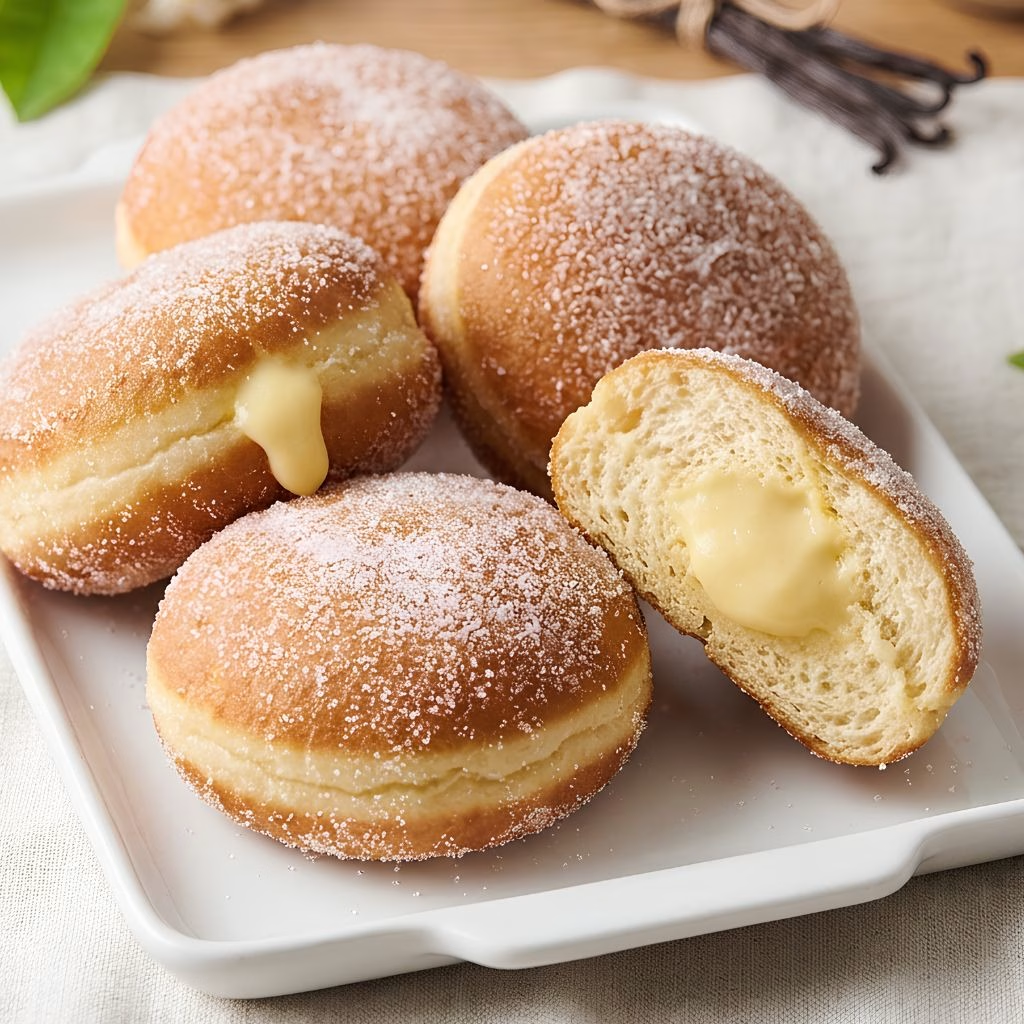
I still remember the first time I pulled a tray of this Vanilla Custard Donut Recipe out of the fryer and watched the golden dough puff up like little clouds. The moment I piped that silky, vanilla-flecked custard into the center, I knew this recipe was a keeper.
I’ve made this batch more times than I can count now, tweaking the dough and the filling until every bite was exactly what I wanted soft, pillowy, and bursting with creamy custard. If you’ve been searching for a custard filled donut recipe that actually works at home, I’m walking you through every step I use myself.
Cooking Time
- Prep Time: 40 minutes (plus 2–3 hours for dough rising)
- Cooking Time: 20 minutes
- Total Time: 3 hours 40 minutes
Ingredients
Here’s everything I gather before I start, with a quick note on why each one matters.
For the dough:
- All-purpose flour (4 cups) – gives the dough enough structure to hold the custard without going dense
- Whole milk, warmed (3/4 cup) – activates the yeast and keeps the dough tender
- Granulated sugar (1/4 cup) – feeds the yeast and adds a light sweetness
- Instant yeast (2 1/4 teaspoons) – this is what makes the donuts rise soft and airy
- Unsalted butter, softened (1/4 cup) – adds richness, so don’t skip or substitute with oil
- Eggs, room temperature (2) – bind the dough and add a soft, cakey texture
- Salt (1/2 teaspoon) – balances the sweetness and sharpens the vanilla flavor
- Vanilla extract (1 teaspoon) – use real extract, not imitation, for the best aroma
For the custard filling:
- Egg yolks (4) – the base of a rich, creamy custard
- Granulated sugar (1/2 cup) – sweetens the custard without overpowering the vanilla
- Cornstarch (1/4 cup) – thickens the custard so it holds its shape inside the donut
- Whole milk (2 cups) – always use whole milk here, skim makes the custard watery
- Vanilla bean paste or extract (2 teaspoons) – this is where the real vanilla flavor comes from
- Unsalted butter (1 tablespoon) – stirred in at the end for a glossy, smooth finish
For coating:
- Granulated sugar or caster sugar (1 cup) – rolled onto the warm donuts for that classic sugary crunch
Note: This recipe serves about 10–12 people, with one donut per serving.
Equipment You Need
- Stand mixer or large mixing bowl – to knead the dough until smooth and elastic
- Rolling pin – to roll the dough out evenly before cutting rounds
- Round cutter (3-inch) – to cut uniform donut shapes
- Heavy-bottomed saucepan – to cook the custard evenly without scorching
- Whisk – to keep the custard smooth and lump-free
- Deep fryer or heavy pot with thermometer – to fry the donuts at a consistent temperature
- Piping bag with a long round tip – to fill the donuts with custard neatly
- Wire rack – to drain excess oil after frying
How to Make a Vanilla Custard Donut Recipe?
Making these donuts isn’t complicated, but it does take a little patience while the dough rises. I always start the custard first so it has plenty of time to cool while I work on the dough. Once you get the rhythm down, this recipe becomes second nature.
Step 1: Make the Vanilla Custard
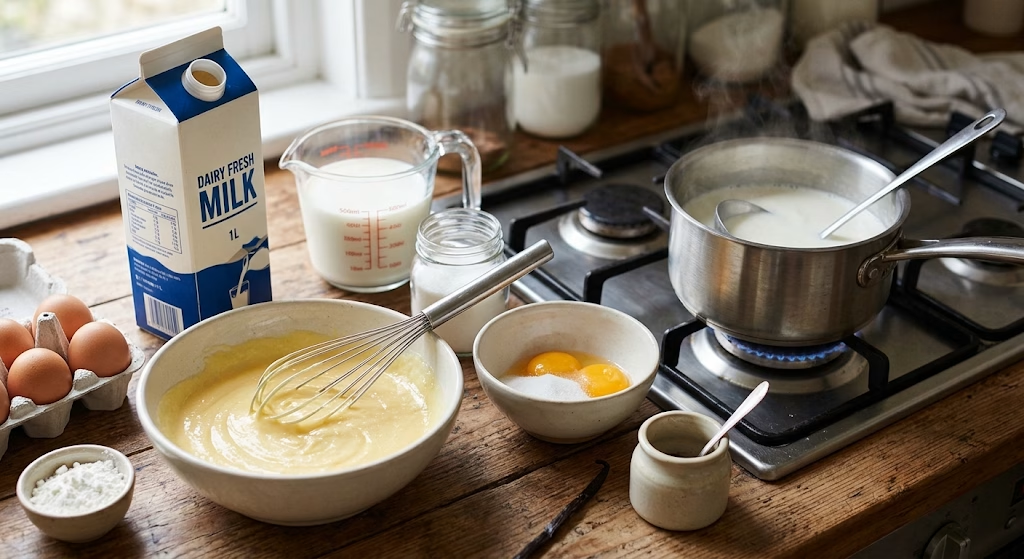
I whisk the egg yolks, sugar, and cornstarch together in a bowl until pale and smooth. Then I heat the milk in a saucepan until it just starts to steam, and slowly pour it into the egg mixture while whisking constantly. This keeps the eggs from scrambling.
Step 2: Thicken the Custard
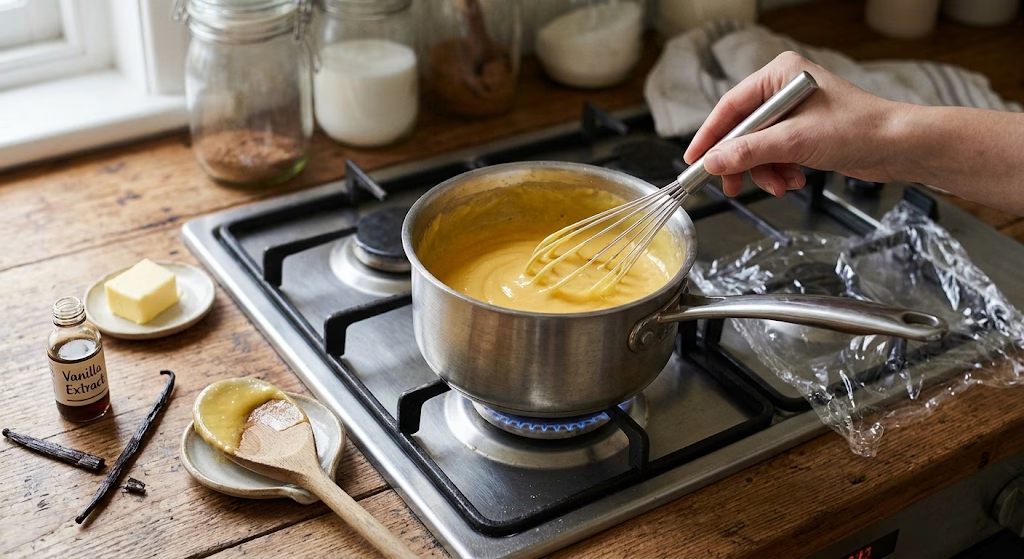
I pour the mixture back into the saucepan and cook it over medium heat, whisking nonstop, until it thickens into a pudding-like consistency. Once it coats the back of a spoon, I stir in the butter and vanilla, then cover it with plastic wrap pressed directly onto the surface.
Step 3: Prepare the Dough
In my mixer bowl, I combine the warm milk, sugar, and yeast, letting it sit for 5 minutes until foamy. Then I add the flour, salt, eggs, vanilla, and butter, kneading until the dough turns smooth and slightly tacky but not sticky.
Step 4: First Rise
I place the dough in a greased bowl, cover it, and let it rise somewhere warm for about 1.5 to 2 hours. I know it’s ready when it has doubled in size and springs back slowly when poked.
Step 5: Shape the Donuts
Once risen, I roll the dough out to about an inch thick on a floured surface. Using my round cutter, I cut out even circles and place them on parchment paper, leaving space between each one.
Step 6: Second Rise
I cover the shaped dough rounds loosely and let them rise again for 45 minutes to an hour. They should look noticeably puffier before frying.
Step 7: Fry the Donuts
I heat oil to 350°F in a deep pot and fry the donuts in batches for about 1-2 minutes per side, until golden brown. I avoid overcrowding the pot so the oil temperature stays steady.
Step 8: Coat and Fill
While still warm, I roll each donut in sugar until fully coated. Once they’ve cooled slightly, I poke a hole in the side with a chopstick and pipe in a generous amount of custard until it feels full.
Additional Tips for Making This Recipe Better
I’ve made plenty of mistakes with this recipe before getting it right, so here’s what actually helped me:
- I always let my dough rise in a slightly warm oven (turned off, just with the light on) because it speeds things up on cooler days
- I whisk my custard constantly while it thickens, since walking away for even a minute leads to lumps
- I keep my frying oil at a steady 350°F using a thermometer, because guessing always leads to greasy or undercooked donuts
- I fill my donuts generously, almost until the piping bag resists, for that satisfying custard-oozing bite
- I let the custard cool completely before piping, otherwise it melts the donut from the inside out
Common Mistakes to Avoid
- I used to rush the rising time, and my donuts came out dense instead of fluffy, so now I always give the dough the full time it needs
- I once fried my donuts at too high a heat, and the outside burned before the inside cooked through, so I stick to 350°F
- I didn’t whisk my custard enough in the beginning, and it turned lumpy, so now I never stop stirring while it thickens
- I filled my donuts while the custard was still warm once, and it made the dough soggy, so I always let it cool first
- I overcrowded my frying pot early on, which dropped the oil temperature and left the donuts oily, so I fry in small batches now
How to Serve Vanilla Custard Donuts?
I like serving these donuts stacked on a plate with a light dusting of powdered sugar on top for a bakery-style look. A drizzle of warm vanilla glaze over the sugar coating adds a nice shine if you’re serving them for a brunch or special occasion. They also pair beautifully with a hot cup of coffee or tea, especially when served slightly warm so the custard inside stays soft.
If you’re planning a dessert spread, these donuts sit nicely alongside other fried treats, and if you love sweet, comforting bakes like this, you might also enjoy browsing more dessert ideas on the recipes page.
Variations
- Dairy-free option: swap whole milk for oat or almond milk and use dairy-free butter in both the dough and custard
- Sugar-free option: use a granulated sugar substitute in equal measure for both the dough and the custard filling
- Chocolate custard: stir in 2 tablespoons of cocoa powder to the custard while it thickens for a chocolate twist
- Citrus flavor: add a teaspoon of lemon or orange zest to the custard for a brighter, fresher taste
- Baked version: for a baked custard donut recipe, bake the shaped dough at 350°F for 10-12 minutes instead of frying
- Krispy Kreme style: glaze the donuts with a thin vanilla glaze instead of rolling them in sugar for a custard filled donut krispy kreme-inspired finish
Nutritional Information
Here’s a general breakdown per donut, though this can vary depending on size and exact ingredients used.
- Calories: approximately 280-320 kcal
- Protein: approximately 5-6 g
- Carbohydrates: approximately 38-42 g
- Fat: approximately 12-14 g
Make Ahead and Storage
You can prepare the dough a day ahead and let it do its first rise slowly in the refrigerator overnight, which actually deepens the flavor. The custard can also be made up to 2 days in advance and stored covered in the fridge until you’re ready to fill the donuts.
Once filled, these donuts are best enjoyed within a day since the custard softens the dough over time. Store any leftovers in an airtight container in the fridge for up to 2 days, and let them sit at room temperature for 10-15 minutes before eating for the best texture.
Unfilled donuts freeze well for up to a month. Just thaw them at room temperature and fill with fresh custard before serving.
Why You’ll Love This Recipe?
This recipe has become a regular in my kitchen for good reason, and I think you’ll feel the same once you try it.
- Easy to customize: I can swap the filling or coating depending on what I’m in the mood for, making this recipe endlessly versatile for different occasions
- Beginner-friendly process: even though it involves yeast dough, I’ve broken it into simple steps that don’t require any special baking experience
- Bakery-quality results at home: every time I make these, they taste just as good, if not better, than the custard filled donuts I’d buy from a shop
- Great for sharing: this batch makes enough to share with family or bring to a gathering, and they always disappear fast
- Make-ahead friendly: I can prep the dough or custard in advance, which makes the actual frying day much less stressful
FAQs
Can I make an easy custard filling for donuts without egg yolks?
Yes, you can use a cornstarch-based pudding mixture with milk and sugar for a simpler custard, though the egg yolks add richness I personally prefer.
Can I use custard powder instead of making custard from scratch?
Absolutely, custard filling for donuts using custard powder works well and saves time, just follow the ratio on the packaging for a thick, pipeable consistency.
How many calories are in a custard filled donut?
A donut with custard filling calories typically range between 280-320 kcal depending on the size and amount of filling used.
Can I bake these instead of frying them?
Yes, for a baked custard donut recipe, bake the shaped dough at 350°F for about 10-12 minutes until golden, then fill with cooled custard once they’ve cooled.
Why did my custard turn out runny instead of thick?
This usually happens if the custard wasn’t cooked long enough, so I always keep whisking over medium heat until it visibly thickens before removing it from the stove.
If you enjoyed this custard filled donut recipe, you might also like exploring more sweet treat ideas over on the dessert recipes collection for your next baking project.

Vanilla Custard Donut Recipe
Ingredients
Method
- I whisk the egg yolks, sugar, and cornstarch together in a bowl until pale and smooth. Then I heat the milk in a saucepan until it just starts to steam, and slowly pour it into the egg mixture while whisking constantly. This keeps the eggs from scrambling.
- I pour the mixture back into the saucepan and cook it over medium heat, whisking nonstop, until it thickens into a pudding-like consistency. Once it coats the back of a spoon, I stir in the butter and vanilla, then cover it with plastic wrap pressed directly onto the surface.
- In my mixer bowl, I combine the warm milk, sugar, and yeast, letting it sit for 5 minutes until foamy. Then I add the flour, salt, eggs, vanilla, and butter, kneading until the dough turns smooth and slightly tacky but not sticky.
- I place the dough in a greased bowl, cover it, and let it rise somewhere warm for about 1.5 to 2 hours. I know it’s ready when it has doubled in size and springs back slowly when poked.
- Once risen, I roll the dough out to about an inch thick on a floured surface. Using my round cutter, I cut out even circles and place them on parchment paper, leaving space between each one.
- I cover the shaped dough rounds loosely and let them rise again for 45 minutes to an hour. They should look noticeably puffier before frying.
- I heat oil to 350°F in a deep pot and fry the donuts in batches for about 1-2 minutes per side, until golden brown. I avoid overcrowding the pot so the oil temperature stays steady.
- While still warm, I roll each donut in sugar until fully coated. Once they’ve cooled slightly, I poke a hole in the side with a chopstick and pipe in a generous amount of custard until it feels full.
Notes
- I always let my dough rise in a slightly warm oven (turned off, just with the light on) because it speeds things up on cooler days
- I whisk my custard constantly while it thickens, since walking away for even a minute leads to lumps
- I keep my frying oil at a steady 350°F using a thermometer, because guessing always leads to greasy or undercooked donuts
- I fill my donuts generously, almost until the piping bag resists, for that satisfying custard-oozing bite
- I let the custard cool completely before piping, otherwise it melts the donut from the inside out