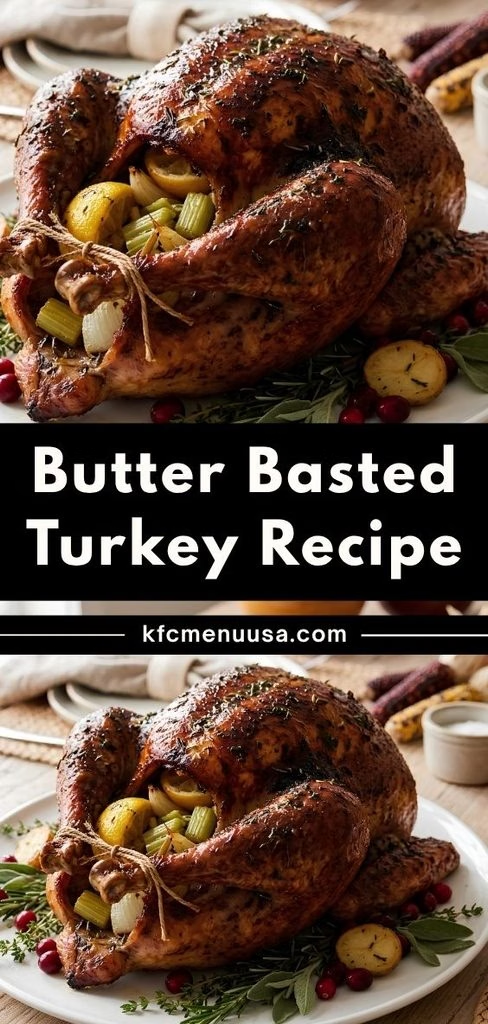
I still remember the first time I pulled a Butter Basted Turkey Recipe out of my oven and watched that golden, glistening skin crackle under the knife. I had tried dry rubs and bland roasts before, but nothing compared to the richness that butter basting brought to the table. I baste every 30 minutes, and I promise you, the smell alone will have your whole family hovering around the kitchen.
This has become my go-to thanksgiving turkey recipe, and once you try it, I think it will become yours too. Whether you are new to roasting a whole bird or you have done it a dozen times, this method is simple, forgiving, and incredibly rewarding.
Cooking Time
- Prep Time: 25 minutes
- Cooking Time: 3 hours 15 minutes (for a 14-15 lb turkey)
- Total Time: 3 hours 40 minutes, plus resting time
Ingredients
- 1 whole turkey (14-15 lbs), thawed completely – a fully thawed bird cooks evenly, so never skip this step
- 1 1/2 sticks unsalted butter, softened – softened butter spreads easily under the skin without tearing it
- 1/2 stick unsalted butter, melted – this is for basting throughout the cook, so keep it warm and liquid
- 2 tablespoons fresh thyme, chopped – fresh thyme gives a brighter, earthier flavor than dried
- 1 tablespoon fresh rosemary, chopped – rosemary pairs beautifully with butter and adds a woodsy aroma
- 4 cloves garlic, minced – fresh garlic infuses the butter far better than garlic powder
- 1 tablespoon kosher salt – kosher salt distributes more evenly than fine table salt
- 1 teaspoon freshly ground black pepper – freshly cracked pepper has noticeably more bite than pre-ground
- 1 teaspoon smoked paprika – this adds color and a subtle smoky depth to the skin
- 1 lemon, halved – stuffed into the cavity, it keeps the meat fragrant while roasting
- 1 onion, quartered – adds savory aroma and helps the turkey sit level in the pan
- 2 celery stalks, roughly chopped – these build flavor into the pan drippings for gravy
- 2 cups turkey or chicken broth – pour this into the roasting pan to prevent drippings from burning
- 1 cup dry white wine (optional) – adds acidity that balances the richness of the butter
Note: this recipe serves 10-12 people comfortably.
Equipment You Need
- Roasting pan with a rack – keeps the turkey elevated so heat circulates evenly underneath
- Meat thermometer – the only reliable way to know your turkey has reached a safe internal temperature
- Basting brush or turkey basting syringe – either works well for getting that butter mixture onto the skin and deep into the meat
- Kitchen twine – helps truss the legs so the turkey cooks more evenly
- Aluminum foil – useful for tenting the breast if it starts to brown too fast
- Large mixing bowl – for combining your softened butter, herbs, and seasonings
- Cheesecloth (optional) – soaking it in melted butter and draping it over the bird is an old-school trick that keeps the skin incredibly moist
How to Make Butter Basted Turkey Recipe?
I always start this recipe the night before if I can, because a little advance prep makes the cooking day so much easier. The process really comes down to three things: seasoning generously, basting often, and watching your thermometer closely. Below I have broken it down into simple stages so nothing feels overwhelming.
Prepare the Turkey
Remove the giblets and neck from the cavity, then pat the turkey completely dry with paper towels. I cannot stress this enough, a dry surface is what gives you crispy skin later. Let the turkey sit at room temperature for about 30 minutes before it goes into the oven so it cooks more evenly.
Make the Herb Butter
In a mixing bowl, combine the softened butter with garlic, thyme, rosemary, salt, pepper, and paprika. I mash it together with a fork until it looks like a chunky paste. This compound butter is the heart of the whole recipe, so take your time mixing it well.
Butter Under the Skin
Gently loosen the skin over the breast and thighs with your fingers, being careful not to tear it. I like to push most of my herb butter directly under the skin, which is the real secret behind a thanksgiving turkey recipe butter under skin method. This keeps the breast meat juicy from the inside out.
Season and Stuff the Cavity
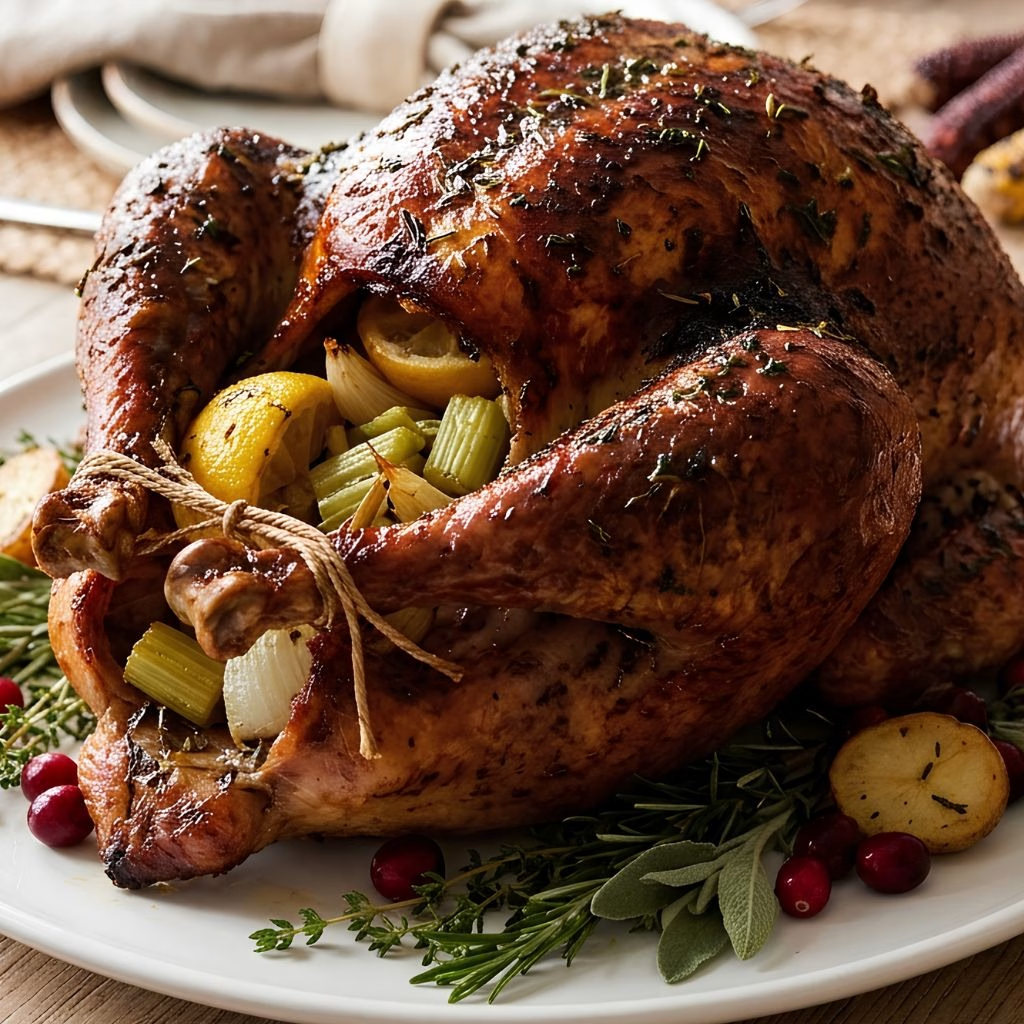
Rub any remaining butter over the outside of the turkey, then season generously with salt and pepper. Stuff the cavity with the lemon halves, onion, and celery. These aromatics steam the inside of the bird as it roasts, keeping the meat tender.
Truss and Set Up the Pan
Tie the turkey legs together with kitchen twine and tuck the wingtips under the body. Pour the broth and wine into the bottom of the roasting pan. This liquid prevents the drippings from scorching and becomes the base for your gravy later.
Roast and Baste
Place the turkey in a 325°F oven. Every 30 minutes, baste the turkey using your melted butter, either with a brush or a basting syringe for deeper penetration. This is the actual turkey baste recipe step that builds layers of flavor and that beautiful mahogany skin color.
Check the Temperature
Insert a meat thermometer into the thickest part of the thigh without touching bone. Pull the turkey once it reads 165°F. Depending on size, this usually takes about 13-15 minutes per pound at 325°F.
Rest Before Carving
Let the turkey rest, loosely tented with foil, for at least 25-30 minutes before carving. I know it is tempting to cut right in, but resting lets the juices redistribute so your slices stay moist instead of running dry onto the board.
Additional Tips for Making This Recipe Better
I have made this turkey more times than I can count, and these are the small things that made the biggest difference for me.
- I always dry brine my turkey with salt a day ahead, and it noticeably improves the texture of the skin.
- I use a turkey basting syringe instead of just a spoon because it gets flavor deep into the breast meat, not just the surface.
- I tent the breast with foil halfway through if it is browning faster than the thighs, so everything finishes at the same time.
- I let my butter soften naturally on the counter rather than microwaving it, since melted butter does not spread evenly under the skin.
- I always keep extra warm broth nearby in case my pan drippings start to dry out during the final hour.
Common Mistakes to Avoid
- I used to skip drying the turkey with paper towels, and my skin never crisped up properly because of the trapped moisture.
- I once roasted a turkey straight from the fridge, and it cooked unevenly since the center was still cold.
- I learned the hard way that opening the oven door too often drops the temperature and adds extra cooking time.
- I used to guess doneness by color alone, but a thermometer is the only way I trust now, since a pale bird can already be fully cooked.
- I skipped resting the turkey once because I was in a hurry, and all the juices spilled out the moment I carved it.
How to Serve Butter Basted Turkey?
I like to carve the turkey right before serving so it stays warm and the slices look glossy from the butter. Arrange the pieces on a large platter and spoon a little of the pan drippings over the top for shine. I usually scatter fresh herb sprigs and a few lemon wedges around the edges for a pop of color.
This pairs wonderfully with homemade gravy, and if you want a quick version, this gravy recipe comes together fast and tastes just as rich as the drippings-based version. Mashed potatoes, roasted vegetables, and warm dinner rolls round out the plate beautifully for a holiday spread.
Variations
- Dairy-free version: swap the butter for a plant-based butter alternative or olive oil for basting.
- Citrus-herb twist: add orange zest and sage to the compound butter for a brighter, more fragrant profile.
- Spicy kick: mix a pinch of cayenne into the butter rub if you enjoy a little heat under the skin.
- Alex Guarnaschelli turkey recipe style: some cooks inspired by the alex guarnaschelli turkey recipe approach like to add anchovy paste into the butter for a savory, umami boost that is barely detectable once roasted.
- Smoked version: finish the turkey on a smoker for the last hour instead of the oven for a deep, smoky flavor.
- Garlic-forward: double the garlic in the turkey butter rub recipe if your family loves a bolder flavor.
Nutritional Information
Here is a rough estimate per serving based on a standard portion of roasted turkey with skin.
- Calories: approximately 420 kcal
- Protein: approximately 48g
- Carbohydrates: approximately 2g
- Fat: approximately 24g
Make Ahead and Storage
You can prepare the herb butter up to two days in advance and keep it covered in the refrigerator until you are ready to rub it onto the turkey. This actually saves time on the day you plan to roast.
Leftover turkey stays fresh in an airtight container in the refrigerator for up to 4 days. Make sure it has cooled to room temperature before sealing it to avoid trapping steam.
For longer storage, slice the meat and freeze it in freezer bags with a little broth to keep it moist, where it will keep well for up to 3 months.
To reheat, warm slices in a covered dish with a splash of broth at 325°F until heated through, which helps prevent the meat from drying out.
Why You’ll Love This Recipe?
This butter basted turkey has earned a permanent spot on my holiday table, and here is why I think it deserves one on yours too.
- It is beginner-friendly: the steps are simple and forgiving, so even a first-time host can pull off a stunning bird.
- It is endlessly versatile: you can swap herbs, add spice, or go dairy-free without losing the juicy results.
- It delivers restaurant-quality flavor: the butter basting technique creates a deep, rich flavor that tastes like it took far more effort than it did.
- It is a crowd pleaser: this recipe reliably produces tender, moist meat that satisfies even the pickiest eaters at the table.
- It pairs with everything: from classic sides to modern twists, this turkey adapts to whatever menu you are building, including a roast chicken dish like this one from oven baked chicken breast if you want a smaller weeknight version of the same buttery technique.
FAQs
Can I use salted butter instead of unsalted?
Yes, but reduce the added salt in the recipe slightly since salted butter already contributes extra sodium.
Do I really need a basting syringe?
No, a basting brush works fine, though a syringe helps push flavor deeper into the breast meat for a juicier bite.
Can I stuff the turkey with bread stuffing instead of aromatics?
You can, but it will increase the cooking time and you will need to check that the stuffing itself reaches a safe internal temperature.
How often should I baste the turkey?
Every 30 minutes gives the best balance between building flavor and not losing too much oven heat from repeated opening.
Can I make this turkey ahead of a big event?
You can prep the butter and aromatics a day ahead, but the turkey itself is best roasted and served the same day for the juiciest results.

Butter Basted Turkey Recipe
Ingredients
Method
- Remove the giblets and neck from the cavity, then pat the turkey completely dry with paper towels. I cannot stress this enough, a dry surface is what gives you crispy skin later. Let the turkey sit at room temperature for about 30 minutes before it goes into the oven so it cooks more evenly.
- In a mixing bowl, combine the softened butter with garlic, thyme, rosemary, salt, pepper, and paprika. I mash it together with a fork until it looks like a chunky paste. This compound butter is the heart of the whole recipe, so take your time mixing it well.
- Gently loosen the skin over the breast and thighs with your fingers, being careful not to tear it. I like to push most of my herb butter directly under the skin, which is the real secret behind a thanksgiving turkey recipe butter under skin method. This keeps the breast meat juicy from the inside out.
- Rub any remaining butter over the outside of the turkey, then season generously with salt and pepper. Stuff the cavity with the lemon halves, onion, and celery. These aromatics steam the inside of the bird as it roasts, keeping the meat tender.
- Tie the turkey legs together with kitchen twine and tuck the wingtips under the body. Pour the broth and wine into the bottom of the roasting pan. This liquid prevents the drippings from scorching and becomes the base for your gravy later.
- Place the turkey in a 325°F oven. Every 30 minutes, baste the turkey using your melted butter, either with a brush or a basting syringe for deeper penetration. This is the actual turkey baste recipe step that builds layers of flavor and that beautiful mahogany skin color.
- Insert a meat thermometer into the thickest part of the thigh without touching bone. Pull the turkey once it reads 165°F. Depending on size, this usually takes about 13-15 minutes per pound at 325°F.
- Let the turkey rest, loosely tented with foil, for at least 25-30 minutes before carving. I know it is tempting to cut right in, but resting lets the juices redistribute so your slices stay moist instead of running dry onto the board.
Notes
- I always dry brine my turkey with salt a day ahead, and it noticeably improves the texture of the skin.
- I use a turkey basting syringe instead of just a spoon because it gets flavor deep into the breast meat, not just the surface.
- I tent the breast with foil halfway through if it is browning faster than the thighs, so everything finishes at the same time.
- I let my butter soften naturally on the counter rather than microwaving it, since melted butter does not spread evenly under the skin.
- I always keep extra warm broth nearby in case my pan drippings start to dry out during the final hour.