I still remember the first time I pulled a batch of Classic Potato Latkes Recipe out of the hot oil and watched the edges turn that perfect deep golden brown. I had no idea something made from just potatoes, onion, and a few pantry staples could taste this good.
Ever since that first try, I make these almost every winter, and I’ve tweaked the process enough times to know exactly what works. If you’ve been nervous about frying your own latkes at home, let me walk you through exactly how I do it, step by simple step.

Cooking Time
- Prep Time: 20 minutes
- Cooking Time: 25 minutes
- Total Time: 45 minutes
Ingredients
- 2 large Russet potatoes (about 1 pound), scrubbed and cut into quarters — starchy potatoes like Russets fry up crispier than waxy varieties
- 1 large onion (about 8 ounces), peeled and quartered — adds sweetness and helps pull extra moisture out of the potato mixture
- 2 large eggs — this is what binds everything together so your latkes hold their shape
- 1/2 cup all-purpose flour — gives the batter structure without making it gummy
- 2 teaspoons coarse kosher salt (or 1 teaspoon fine sea salt), plus more for sprinkling — season the mixture, not just the top, for the best flavor
- 1 teaspoon baking powder — this is my little secret for a lighter, fluffier interior
- 1/2 teaspoon freshly ground black pepper — freshly cracked makes a noticeable difference over pre-ground
- Neutral oil such as safflower, for frying — a high smoke point oil keeps the latkes from tasting burnt
Note: This recipe serves about 6 people and makes roughly 3 dozen small latkes.
Equipment You Need
- Food processor with a grating disc — shreds the potatoes and onion quickly and evenly
- Clean kitchen towel or cheesecloth — essential for wringing out excess liquid
- Large mixing bowl — for combining the shredded vegetables with the batter
- Heavy-bottomed skillet or cast-iron pan — holds heat steadily for even frying
- Slotted spatula — makes flipping and lifting latkes out of the oil much easier
- Paper towel-lined plate or wire rack — drains excess oil after frying

How to Make a Classic Potato Latkes Recipe?
Making latkes from scratch is honestly simpler than it looks once you understand the rhythm: grate, squeeze, mix, and fry. The whole process takes less than an hour, and most of that time is hands-on rather than waiting around. Here’s exactly how I break it down in my own kitchen.
Step 1: Grate the Potatoes and Onion
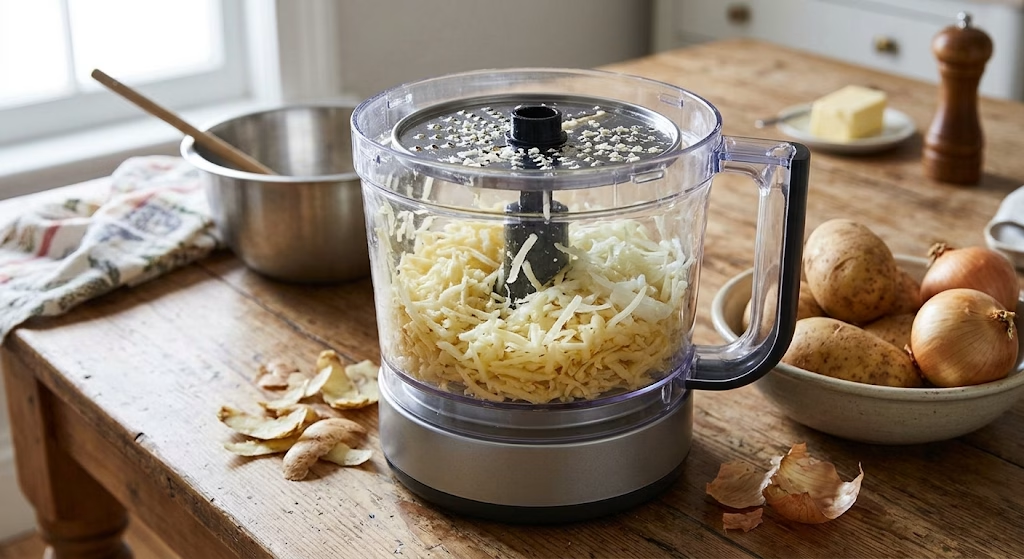
I run the potatoes and onion through my food processor fitted with the coarse grating disc. This takes seconds and gives a much more even shred than a box grater. If you don’t have a food processor, a box grater works fine too, just expect a little more arm work.
Step 2: Wring Out the Liquid
This step matters more than people think. I pile the grated mixture into a clean kitchen towel and twist it tightly over the sink until almost no liquid drips out. The drier the mixture, the crispier your latkes will turn out.
Step 3: Mix the Batter
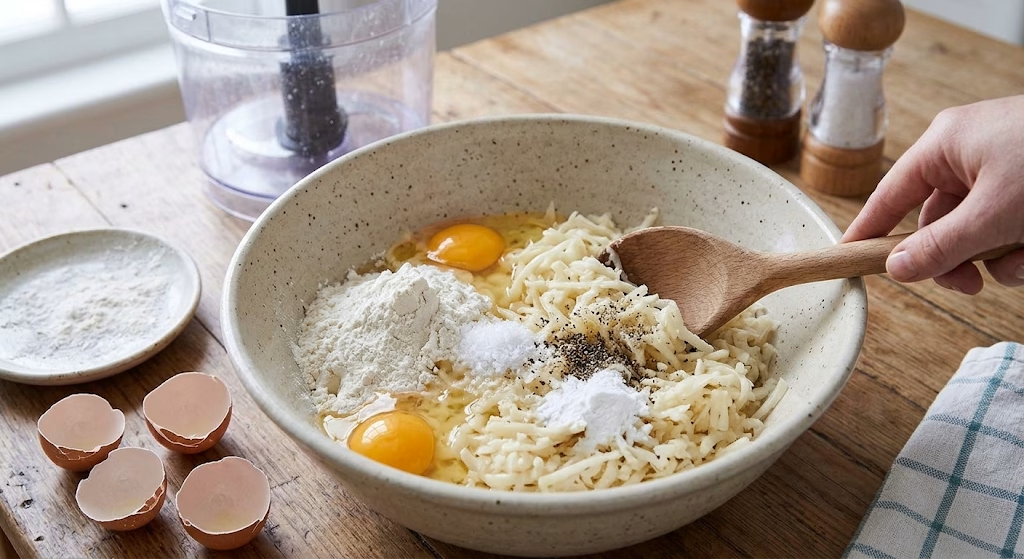
I transfer the dry potato and onion shreds to a large bowl, then add the eggs, flour, salt, baking powder, and pepper. I stir just until everything is combined, since overmixing can make the batter dense instead of light.
Step 4: Heat the Oil
I pour about a quarter inch of oil into a heavy skillet and heat it over medium-high until it shimmers. Testing with a small drop of batter first helps me know the oil is ready before I commit a full batch.
Step 5: Shape and Fry the Latkes
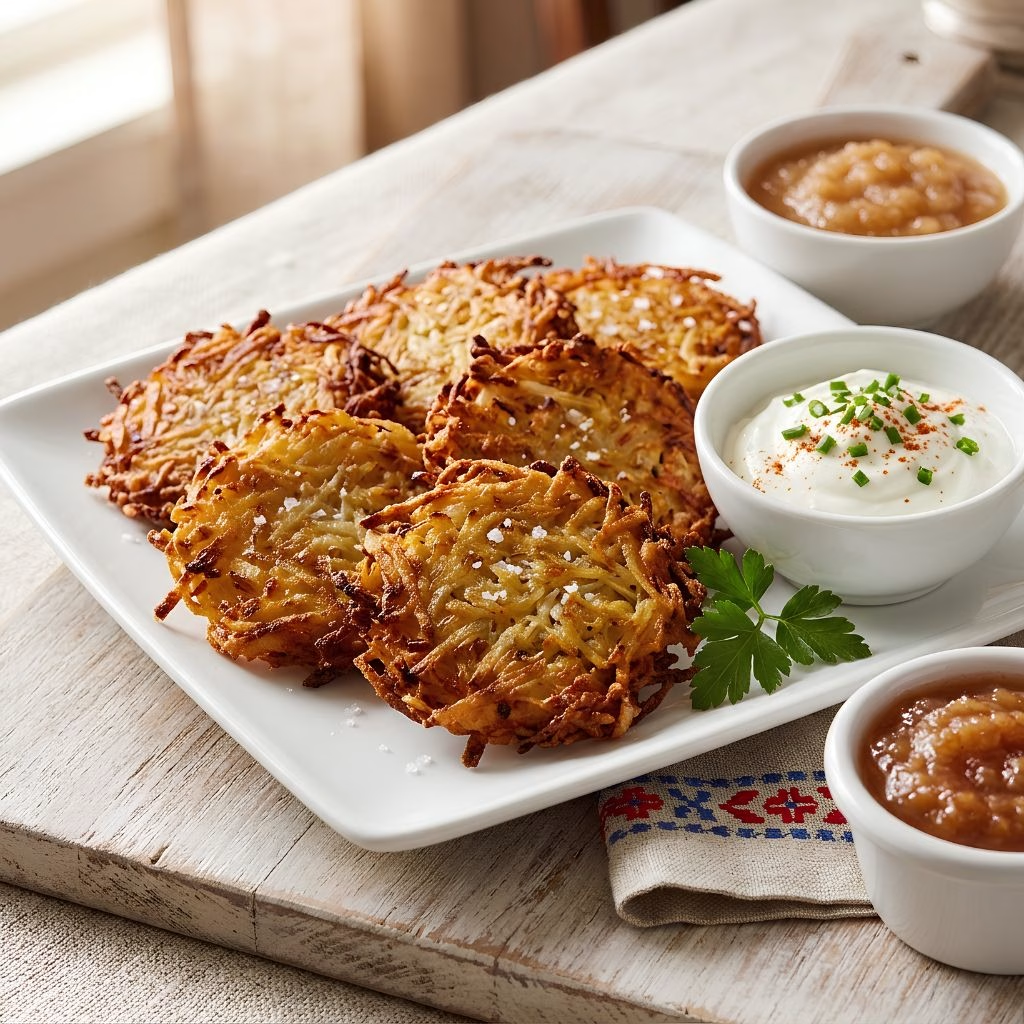
I spoon portions of the mixture into the hot oil and flatten each one gently with a spatula into a disc shape. I let them fry undisturbed until the edges turn golden brown and crisp, which usually takes about five minutes per side.
Step 6: Flip and Finish Cooking
Once the bottom is deeply golden, I carefully flip each latke and let the other side crisp up the same way. I keep the heat steady so the inside cooks through without the outside burning.
Step 7: Drain and Season
As soon as each batch comes out of the pan, I set them on a paper towel-lined plate and sprinkle with a little extra salt while they’re still hot. That warm salt sticks beautifully and boosts the flavor instantly.
Additional Tips for Making This Recipe Better
I’ve made enough batches of these to pick up a few tricks that genuinely make a difference.
- I always squeeze the potato mixture twice if it still feels wet, since one pass isn’t always enough.
- I fry in small batches so the oil temperature doesn’t drop, which keeps every latke crisp instead of soggy.
- I keep cooked latkes warm in a low oven on a wire rack instead of stacking them, so they stay crunchy.
- I grate the potatoes right before mixing since they brown quickly once exposed to air.
- I taste a tiny bit of the raw batter for seasoning before frying the whole batch.
Common Mistakes to Avoid
Over the years I’ve made just about every latke mistake there is, so here’s what I now watch out for.
- I used to skip squeezing out the liquid properly, and my latkes turned soggy and fell apart in the pan.
- I once used cold oil straight from the bottle without preheating it, and the latkes soaked up way too much grease.
- I crowded the pan early on, which dropped the oil temperature and left everything pale instead of golden.
- I forgot to season the mixture itself a few times, relying only on salt at the end, and the inside tasted bland.
- I flipped the latkes too early before a crust had formed, and they broke apart in the oil.
How to Serve Classic Potato Latkes
I like to serve my latkes while they’re still warm, piled loosely on a large platter so the edges stay visible and crisp rather than hidden under a stack. A dollop of sour cream or a spoonful of chunky applesauce on the side is classic, and a sprinkle of fresh chives on top adds a nice pop of color.
For a slightly fancier presentation, I’ll top a few with smoked salmon and a small spoon of crème fraîche, which turns this simple side into something that feels special enough for a holiday table.
Variations
- Swap in sweet potatoes for a portion of the Russets for a slightly sweeter, more colorful latke.
- Use gluten-free flour or matzo meal instead of all-purpose flour to keep the batter gluten-free.
- Stir in a little grated garlic or fresh dill for extra flavor in every bite.
- Try a dairy-free route by skipping sour cream and serving with applesauce or a plant-based yogurt instead.
- Mix in a bit of grated zucchini or carrot for a slightly different texture and more vegetables.
- Add a pinch of smoked paprika or cayenne to the batter if you like a little heat.
Nutritional Information
Here’s a general idea of what you can expect per serving of this recipe, though exact numbers will vary based on oil absorption and portion size.
- Calories: around 180-220 per serving
- Protein: approximately 5-6 grams
- Carbohydrates: roughly 22-26 grams
- Fat: about 9-12 grams
Make Ahead and Storage
I often make the potato and onion mixture a few hours ahead and keep it covered in the fridge, giving it one more squeeze before frying since it tends to release more liquid as it sits.
Leftover latkes keep well in an airtight container in the refrigerator for up to 3 days. I reheat them in a hot oven or air fryer rather than the microwave, since that keeps the edges crisp instead of turning them soft.
For longer storage, I freeze fully cooled latkes in a single layer before transferring them to a freezer bag, where they’ll keep for up to 2 months. I reheat them straight from frozen in a hot oven until crisp and warmed through.
Why You’ll Love This Recipe
This latke recipe has earned a permanent spot in my yearly cooking routine, and here’s why I think you’ll feel the same way.
- It comes together with just a handful of pantry staples, so I rarely need a special grocery trip.
- The texture is endlessly customizable, since I can make these thinner and crispier or slightly thicker depending on my mood.
- It works for so many diets with small swaps, whether that’s gluten-free flour or a dairy-free topping.
- The flavor is easy to build on, since add-ins like herbs, garlic, or spices change the whole character of the dish.
- It’s a guaranteed crowd-pleaser at gatherings, and I rarely have leftovers by the end of the night.
If you enjoy crispy, pan-fried sides like this one, you might also like browsing more comforting potato-based dishes such as this mashed potatoes recipe, which shares that same cozy, homemade feel.
FAQs
Can I make potato latkes without a food processor?
Yes, a box grater works just fine, though it takes a bit more effort and time compared to using a food processor.
Why are my latkes falling apart while frying?
This usually happens when there’s too much moisture left in the potato mixture or the oil isn’t hot enough before you add the batter.
Can I bake latkes instead of frying them?
Yes, you can bake them on a well-oiled sheet at a high temperature, though the texture will be a bit less crisp than the fried version.
How do I keep latkes crispy after cooking?
I always place them on a wire rack instead of a flat plate, which lets air circulate underneath and stops them from steaming and going soft.
What’s the best way to reheat leftover latkes?
I reheat mine in a hot oven or air fryer for a few minutes per side, which brings back that crispy texture far better than a microwave ever could.
If you’re building out a full holiday spread, it’s worth pairing this dish with something sweet to round out the table, like a classic apple pie recipe for dessert.

Classic Potato Latkes Recipe
Ingredients
Method
- I run the potatoes and onion through my food processor fitted with the coarse grating disc. This takes seconds and gives a much more even shred than a box grater. If you don’t have a food processor, a box grater works fine too, just expect a little more arm work.
- This step matters more than people think. I pile the grated mixture into a clean kitchen towel and twist it tightly over the sink until almost no liquid drips out. The drier the mixture, the crispier your latkes will turn out.
- I transfer the dry potato and onion shreds to a large bowl, then add the eggs, flour, salt, baking powder, and pepper. I stir just until everything is combined, since overmixing can make the batter dense instead of light.
- I pour about a quarter inch of oil into a heavy skillet and heat it over medium-high until it shimmers. Testing with a small drop of batter first helps me know the oil is ready before I commit a full batch.
- I spoon portions of the mixture into the hot oil and flatten each one gently with a spatula into a disc shape. I let them fry undisturbed until the edges turn golden brown and crisp, which usually takes about five minutes per side.
- Once the bottom is deeply golden, I carefully flip each latke and let the other side crisp up the same way. I keep the heat steady so the inside cooks through without the outside burning.
- As soon as each batch comes out of the pan, I set them on a paper towel-lined plate and sprinkle with a little extra salt while they’re still hot. That warm salt sticks beautifully and boosts the flavor instantly.
Notes
- I always squeeze the potato mixture twice if it still feels wet, since one pass isn’t always enough.
- I fry in small batches so the oil temperature doesn’t drop, which keeps every latke crisp instead of soggy.
- I keep cooked latkes warm in a low oven on a wire rack instead of stacking them, so they stay crunchy.
- I grate the potatoes right before mixing since they brown quickly once exposed to air.
- I taste a tiny bit of the raw batter for seasoning before frying the whole batch.