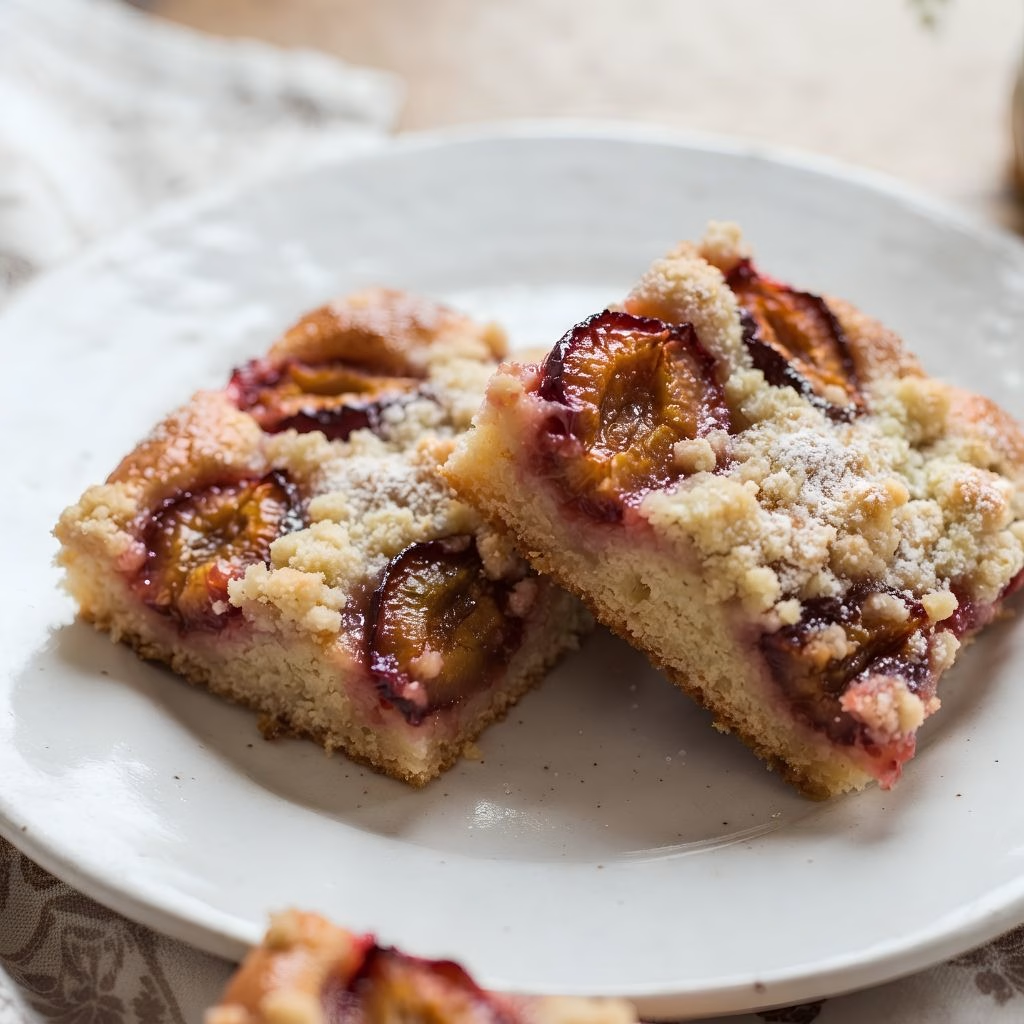
I still remember the first time I pulled a tray of warm Zwetschgenkuchen out of the oven and watched the streusel turn golden on top of those soft, juicy plums. That smell alone took me straight back to a cozy German kitchen.
I’ve made this German Plum Cake Recipe more times than I can count now, tweaking little things here and there until I landed on a version I’m genuinely proud of. If you’ve never baked with Italian plums before, trust me, this recipe is about to become one of your favorite fall bakes. Let me walk you through exactly how I make it at home.
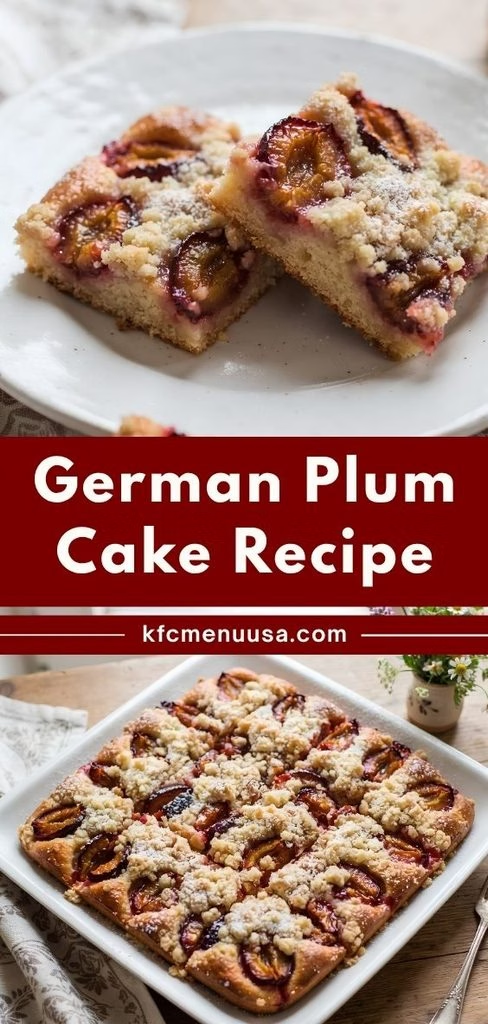
Cooking Time
- Prep Time: 30 minutes (plus rising time)
- Cooking Time: 30-35 minutes
- Total Time: around 2 hours 30 minutes
Ingredients
- 3 pounds Italian plums, quartered and pitted — these small, firm plums hold their shape far better than regular plums
- 1 cup warm milk — helps activate the yeast, so make sure it’s warm, not hot
- 1 1/2 tablespoons active dry yeast — the backbone of that soft, fluffy base
- 4 cups all-purpose flour — gives the dough enough structure to hold the fruit
- 3/4 cup sugar — just enough sweetness without overpowering the tart plums
- 1/2 teaspoon salt — balances the sweetness nicely
- 1/2 cup butter, melted but not hot — adds richness to the dough
- 2 eggs — bind everything together and add softness
- 1 teaspoon pure vanilla extract — a small touch that rounds out the flavor
- 1 cup all-purpose flour (for streusel) — creates that crumbly topping everyone loves
- 1 cup sugar (for streusel) — gives the streusel its signature sweet crunch
- 1 teaspoon ground cinnamon — adds warmth to every bite
- 1/2 cup butter, room temperature (for streusel) — rub it in with your fingers for the best texture
Note: This recipe makes a large sheet cake that serves about 10-12 people.
Equipment You Need
- Stand mixer with dough hook — makes kneading the sticky yeast dough so much easier
- Large jelly roll pan or German Backblech — gives the dough enough room to spread evenly
- Mixing bowls — one for the dough, one for the streusel
- Plastic wrap — covers the dough while it rises
- Sharp knife — for quartering the plums cleanly
- Pastry scraper or chopper — perfect for cutting the baked cake into neat squares
How to Make a German Plum Cake Recipe?
Before you start, I want you to know this cake isn’t hard, it just takes a little patience while the dough rises. Once you’ve made it once, you’ll see how simple the process really is. Here’s exactly how I put mine together every single time.
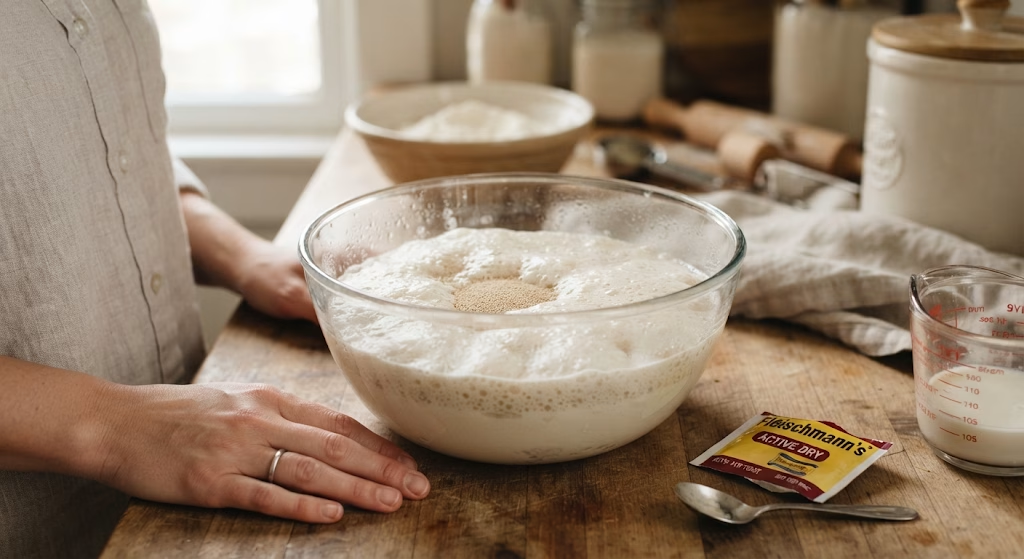
Activate the Yeast
Pour the warm milk into a bowl and sprinkle the yeast over it. Let it sit for about 5-10 minutes until it turns frothy on top. I always use this step as a quick check if it doesn’t foam, my yeast is too old and I start over before wasting the rest of the ingredients.
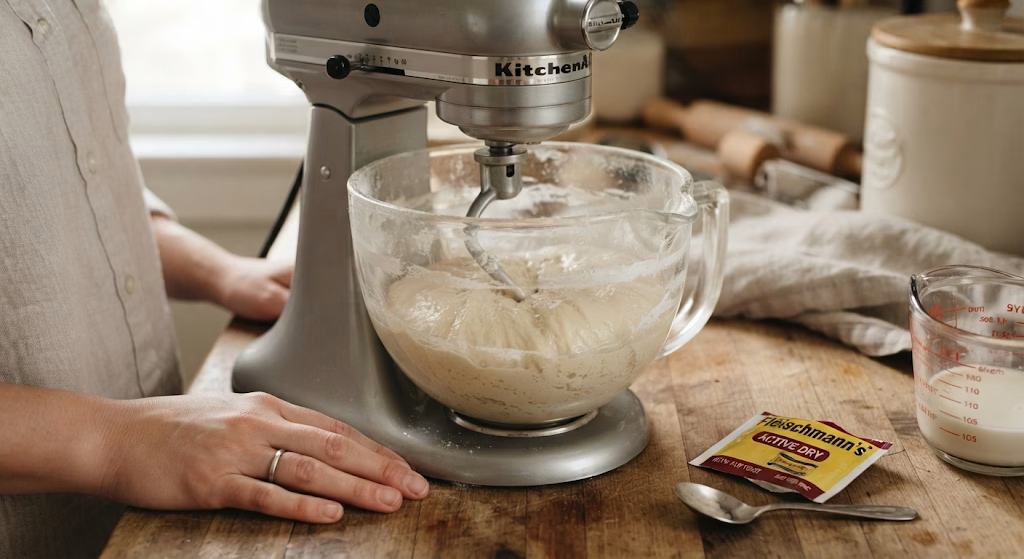
Mix and Knead the Dough
In your stand mixer bowl, combine the flour, sugar and salt, then add the yeast mixture, melted butter, eggs and vanilla. Knead with the dough hook for about 4-5 minutes. The dough stays sticky and soft, more like a thick batter than a traditional ball of dough, and that’s completely normal.
Let the Dough Rise
Cover the bowl loosely with plastic wrap and set it somewhere warm and draft-free. I usually let mine sit for a full hour, until it has roughly doubled in size. This step is what gives the base its light, fluffy texture once baked.
Spread the Dough in the Pan
Butter your jelly roll pan generously, then use your hands to press the dough out to the edges. It will resist a little since it’s yeast dough, but just keep working it back into place. I find it easier once the plums go on top, since they help hold everything down.
Arrange the Plums
Lay the quartered plums in tight rows across the dough, covering the surface completely. If you like a sweeter bite, a light sprinkle of sugar or cinnamon-sugar works beautifully here, just don’t overdo it or the cake turns watery.
Second Rise and Streusel
Let the topped dough rise again for up to an hour. While you wait, mix the streusel ingredients with your fingers until it looks like coarse, clumpy sand, then scatter it generously over the plums.
Bake and Cool
Bake at 350°F for 30-35 minutes, until the top turns a deep golden color. Let the cake rest for at least 10 minutes before slicing so the juices have time to settle into the dough.
Additional Tips for Making This Recipe Better
I’ve learned a few things the hard way over the years, so let me save you the trouble.
- I always drain my plums really well if I’m using frozen ones, otherwise the dough turns soggy
- I like to check my yeast is still active before committing the rest of my ingredients
- I never rush the rising time, even when I’m short on patience, because it really does change the texture
- I press the streusel gently into the plums instead of just sprinkling it loosely on top
- I bake on the middle rack every time for the most even color
Common Mistakes to Avoid
- I used to overload the dough with sugar on the plums, and it made the whole cake watery, so now I keep it light
- I once used overly ripe, mushy plums and regretted it since they turned to mush after baking
- I didn’t butter my pan generously enough the first time and the edges stuck badly
- I pulled the cake out too early once thinking it looked done, but the center needed a few extra minutes
- I sliced the cake right out of the oven and the juices ran everywhere, so now I always let it rest first
How to Serve German Plum Cake?
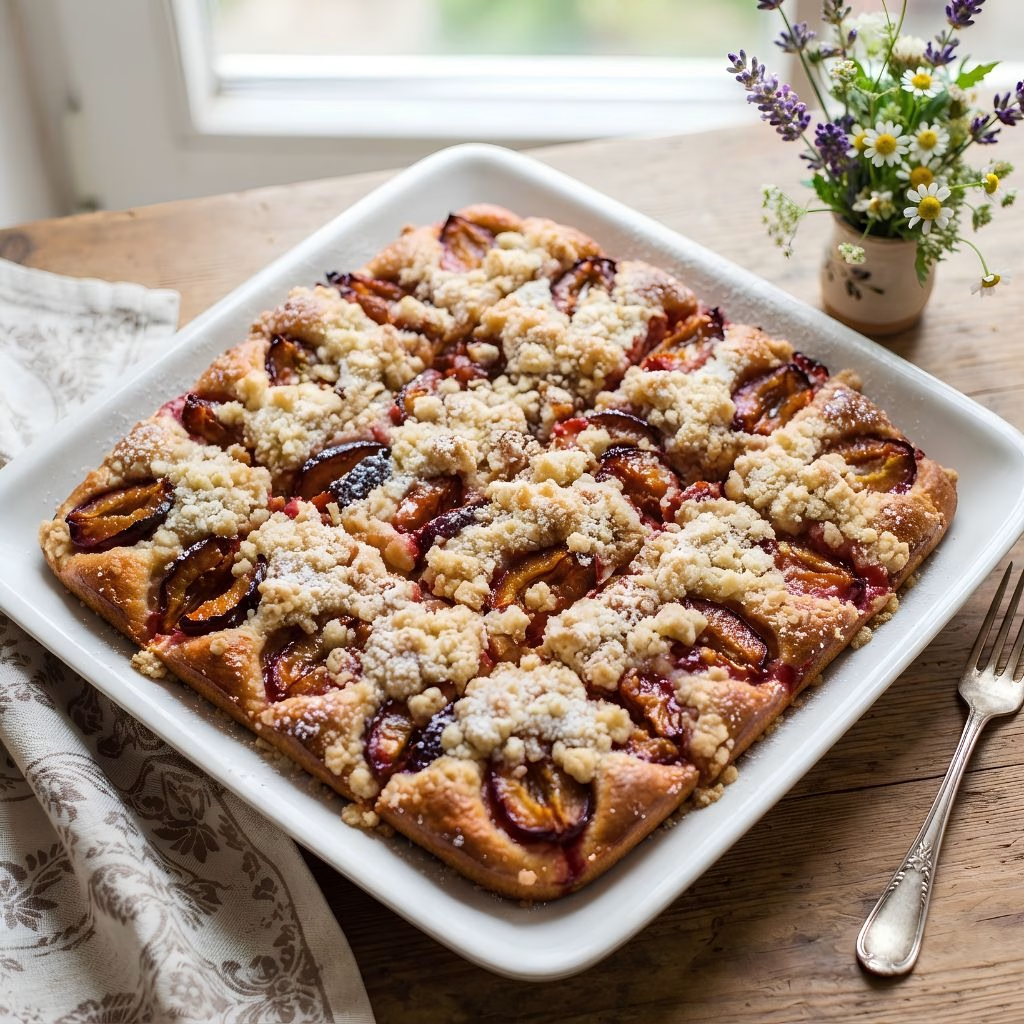
I love serving this cake slightly warm with a light dusting of powdered sugar on top, it makes the golden streusel really pop. A dollop of lightly sweetened whipped cream or a scoop of vanilla ice cream on the side takes it to another level, especially if you’re serving it for dessert rather than with coffee.
For a cozy breakfast or afternoon treat, I just cut it into neat squares and serve it plain alongside a warm cup of coffee or tea, the way it’s traditionally enjoyed in Germany.
If you’re a fan of crumb-topped bakes, this cake pairs really well with recipes like a classic streusel coffee cake from our collection, which has that same comforting, cinnamon-kissed crunch.
Variations
- Swap the plums for apricots, peaches or nectarines for a different stone fruit twist
- Use a dairy-free butter substitute and plant-based milk to make it dairy-free
- Cut the sugar slightly and let the natural sweetness of ripe plums carry the flavor for a lighter version
- Add a handful of chopped almonds or walnuts to the streusel for extra crunch
- Swap the yeast dough for a quick shortcrust base if you’re short on time
Nutritional Information
Here’s a general idea of what one serving of this cake looks like, based on a 12-serving batch.
- Calories: around 390 kcal per slice
- Protein: about 6 grams
- Carbohydrates: around 71 grams
- Fat: approximately 9 grams
Make Ahead and Storage
This cake actually tastes even better the next day once the plum juices have had time to soak into the dough. I usually store mine covered at room temperature, and it stays fresh for 2-3 days without any issue.
If you want to freeze it, wrap individual squares tightly and freeze for up to a month. Just let it thaw overnight in the fridge before serving.
To reheat, I pop a slice in the microwave for about 15-20 seconds or warm it briefly in a low oven, just enough to soften it back up without drying it out.
Why You’ll Love This Recipe?
There’s a reason this cake has stayed a staple in German homes for generations, and once you try it, you’ll understand why I keep coming back to it too.
- It’s not overly sweet, so you get that perfect balance between the tart plums and the buttery streusel
- It’s incredibly versatile, since you can swap in other stone fruits whenever plums aren’t in season
- It feeds a crowd easily, making it ideal for gatherings, potlucks or weekend baking with family
- It tastes even better the next day, so it’s genuinely a make-ahead friendly dessert
- It gives you that nostalgic, homemade bakery feel without needing any fancy equipment
FAQs
Can I use regular plums instead of Italian plums?
You can, but Italian plums work best since they’re firmer and less watery, which keeps the cake from turning soggy.
Can I make this cake without yeast?
Yes, you can swap the yeast dough for a simple shortcrust base, though the texture will be denser than the traditional version.
How do I know when the dough has risen enough?
It should roughly double in size and feel soft and puffy to the touch, usually after about an hour in a warm spot.
Can I freeze this cake after baking?
Absolutely, wrap it tightly and freeze for up to a month, then thaw it overnight in the fridge before serving.
Why is my streusel melting into the plums?
This usually happens when there’s too much sugar sprinkled directly on the plums, so keep that layer light.

German Plum Cake Recipe
Ingredients
Method
- Pour the warm milk into a bowl and sprinkle the yeast over it. Let it sit for about 5-10 minutes until it turns frothy on top. I always use this step as a quick check — if it doesn’t foam, my yeast is too old and I start over before wasting the rest of the ingredients.
- In your stand mixer bowl, combine the flour, sugar and salt, then add the yeast mixture, melted butter, eggs and vanilla. Knead with the dough hook for about 4-5 minutes. The dough stays sticky and soft, more like a thick batter than a traditional ball of dough, and that’s completely normal.
- Cover the bowl loosely with plastic wrap and set it somewhere warm and draft-free. I usually let mine sit for a full hour, until it has roughly doubled in size. This step is what gives the base its light, fluffy texture once baked.
- Butter your jelly roll pan generously, then use your hands to press the dough out to the edges. It will resist a little since it’s yeast dough, but just keep working it back into place. I find it easier once the plums go on top, since they help hold everything down.
- Lay the quartered plums in tight rows across the dough, covering the surface completely. If you like a sweeter bite, a light sprinkle of sugar or cinnamon-sugar works beautifully here, just don’t overdo it or the cake turns watery.
- Let the topped dough rise again for up to an hour. While you wait, mix the streusel ingredients with your fingers until it looks like coarse, clumpy sand, then scatter it generously over the plums.
- Bake at 350°F for 30-35 minutes, until the top turns a deep golden color. Let the cake rest for at least 10 minutes before slicing so the juices have time to settle into the dough.
Notes
- I always drain my plums really well if I’m using frozen ones, otherwise the dough turns soggy
- I like to check my yeast is still active before committing the rest of my ingredients
- I never rush the rising time, even when I’m short on patience, because it really does change the texture
- I press the streusel gently into the plums instead of just sprinkling it loosely on top
- I bake on the middle rack every time for the most even color